Gothic architecture and Europe's grandest cathedrals
The English poet and philosopher Samuel Taylor Coleridge once described Gothic architecture as "infinity made imaginable." When you step inside a cathedral built during the height of this style—from the late 12th century through the 16th century—it is easy to see why. The towering walls extend almost infinitely upward, guiding the eye and the spirit toward heaven.
Gothic design represents a significant departure from the Romanesque style that was predominant in the 11th and 12th centuries. Defined by thick walls, heavy masonry and round arches, Romanesque architecture projected a sense of strength and solidity. As France emerged as a cultural and political center in the early 12th century, master builders began reimagining these spaces, using new techniques to achieve soaring heights and luminous sanctuaries.
Brilliant engineering innovations, such as pointed arches, flying buttresses and ribbed vaults, enabled Gothic cathedrals to reach unprecedented heights. Together, these elements redistributed structural weight outward, allowing builders to create walls that soared higher and grew thinner, while also opening space for vast stained-glass windows. These windows did more than bathe the stone interiors in a celestial, colorful glow; they also brought biblical stories to life for medieval worshippers.
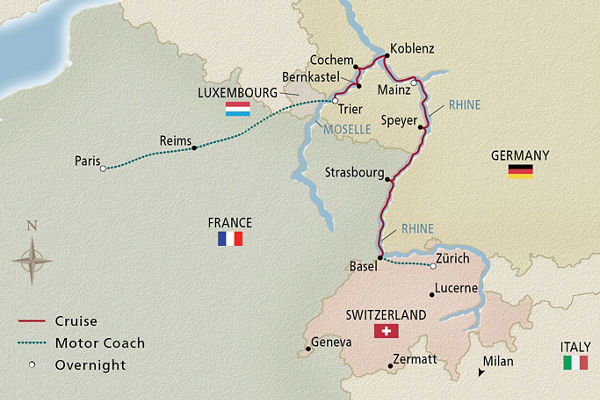
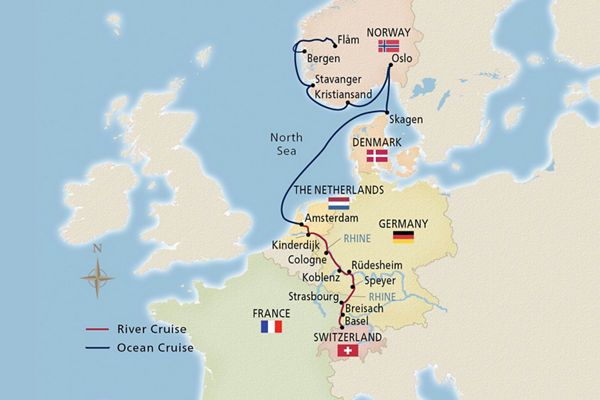
When you sail through Europe with us, you can experience some of the finest examples of Gothic architecture firsthand, including the remarkable cathedrals highlighted below.

Cologne Cathedral
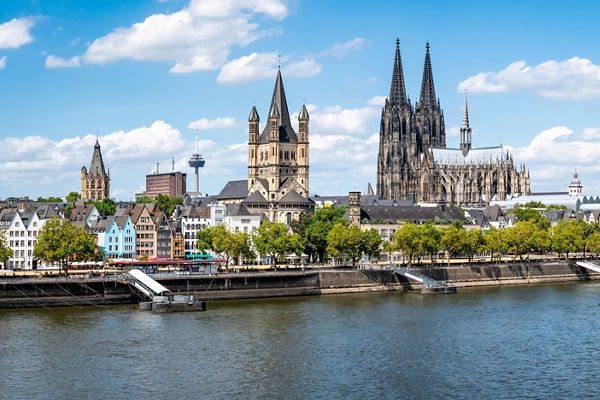
Construction of Germany's Cologne Cathedral began in 1248, and the magnificent edifice stands as a testament to grand ambition and the challenges of medieval construction. Builders undertook the immense project to create a fitting home for the relics of the Three Kings, which arrived in Cologne in 1164. Economic and political changes halted the construction, leaving the structure unfinished for centuries. A wooden crane remained atop the incomplete south tower, becoming a prominent feature of the city skyline. Work on Cologne Cathedral resumed in the 19th century, around 1814, but significant funding for the project was not secured until the 1840s. Guided by original 14th-century architectural drawings, architects and craftsmen completed the masterpiece in 1880.
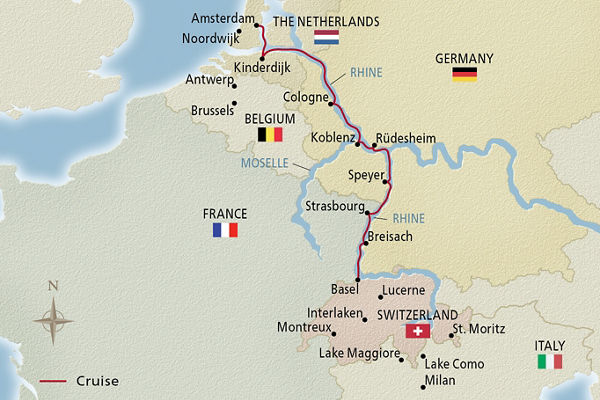
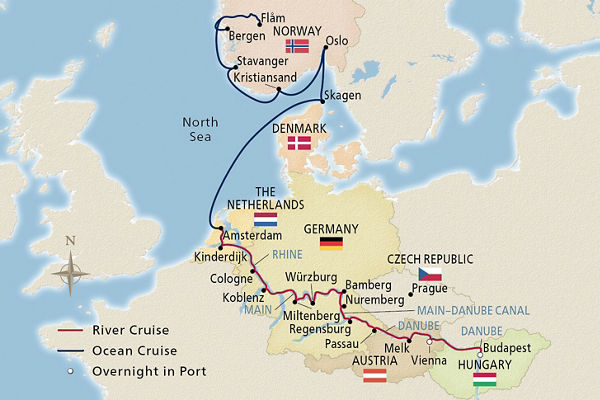
Today, Cologne Cathedral ranks amongst the largest Gothic churches in northern Europe, featuring twin spires that rise to 515 ft (157 m) in height. As you wander through the five-aisle interior, you can view the Shrine of the Three Kings, a masterpiece of medieval goldwork. The cathedral also preserves the largest 14th-century window sequence in Europe, alongside a striking modern stained glass window by artist Gerhard Richter, which consists of more than 11,000 square panes of colored glass. UNESCO designated Cologne Cathedral a World Heritage Site in 1996, recognizing its exceptional architectural value. You can easily visit this landmark when you join us for a voyage along the Rhine River.
Strasbourg Cathedral
Located in the historic region of Alsace, Strasbourg Cathedral represents an exquisite fusion of architectural eras. Its foundations and crypt originate from an 11th-century Romanesque cathedral, while most of the present structure was built in the Gothic style during the 13th and 14th centuries. With the completion of its northern spire in 1439, the cathedral reached a height of 466 ft (142 m), securing its status as the tallest building in the Christian world until the 19th century.
Distinctive pink sandstone quarried from the nearby Vosges Mountains gives this structure its striking appearance. The stone shifts in color, from deep rose to soft gold, depending on the time of day and the clarity of the sky. The cathedral’s west facade is renowned for its intricate stone carvings, which French author Victor Hugo described as a "skillful combination of monumental size and delicateness." Inside, the expansive nave features 12th- to 14th-century stained glass, including a magnificent rose window. Visitors can also view the famous 19th-century, Renaissance-style astronomical clock, which delights onlookers with an automated parade of the apostles daily. Strasbourg Cathedral is the architectural centerpiece of the Grande-Île, the historic heart of Strasbourg, which was designated a UNESCO World Heritage Site in 1988.
Reims Cathedral
Notre-Dame de Reims occupies a central place in French history, deeply intertwined with the monarchy. Master builders constructed the present Gothic cathedral during the 13th century on the site of earlier buildings, including a 5th-century basilica traditionally linked to the baptism of Clovis I, King of the Franks. For centuries, this grand structure served as the coronation site for French monarchs, hosting the ceremonies for kings, from Louis VIII in 1223 to Charles X in 1825.
Architecturally, Reims Cathedral represents a triumph of the High Gothic style, displaying a harmonious balance of monumental scale and delicate ornamentation. Thousands of finely detailed stone statues adorn the facade, most notably the "Smiling Angel" (L'Ange au Sourire), which serves as a symbol of the city. The interior features a nave stretching 377 ft (115 m) in length and expansive stained-glass windows that cast a lovely glow across the stone floors. Though the cathedral suffered extensive damage from artillery fire during World War I, meticulous restoration efforts, funded in part by American philanthropy, helped preserve the monument for future generations. In 1991, Reims Cathedral was designated a UNESCO World Heritage Site, and it remains a deeply moving highlight for travelers exploring French heritage.
Rouen Cathedral
Situated in the heart of Normandy, Rouen Cathedral illustrates the evolution of Gothic architecture over several centuries. Built on the site of earlier Romanesque structures, the cathedral was expanded and modified from the 12th through the 16th centuries, resulting in a remarkable blend of Early Gothic, Rayonnant, Flamboyant and Renaissance elements.
Its dramatic west facade, distinguished by three unequal towers, ranks among the most recognizable in France. A cast-iron spire crowns the central lantern tower, reaching a height of 495 ft (151 m) to become the tallest spire in France. This monument holds a legendary place in art history. The impressionist master Claude Monet was so captivated by the shifting light on the cathedral’s intricate craftsmanship that he painted a series of 28 views of the western portal and facade between 1892 and 1893. Inside, visitors encounter important reminders of Normandy’s past, including the tomb of Rollo, the Viking founder and first ruler of Normandy, and a monument containing the heart of King Richard the Lionheart.
St. Stephen's Cathedral
Dominating the skyline of Vienna, St. Stephen's Cathedral, affectionately called "Steffl" by the Viennese, stands as a powerful symbol of Austrian cultural identity and resilience. While portions of the west facade and its two Romanesque towers survive from a 13th-century structure, most of the present cathedral was rebuilt in the Gothic style during the 14th and 15th centuries under the patronage of Duke Rudolf IV.
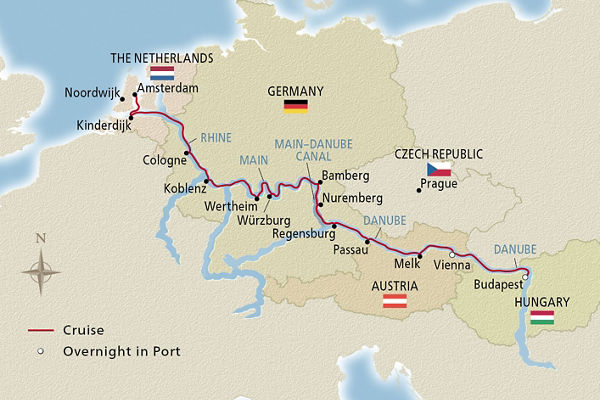
The cathedral features a steeply pitched roof, which stretches 364 ft (111 m) in length and showcases 230,000 glazed ceramic tiles. Arranged in a colorful zigzag pattern, these tiles also form a large double-headed eagle on the southern slope, a historic emblem of the Hapsburg dynasty. The soaring south tower, which rises 446 ft (136 m), served as a crucial observation post during battles. Inside, the limestone nave transitions into a richly decorated baroque sanctuary. Among the cathedral’s greatest treasures is its late Gothic sandstone pulpit, carved around 1500 with detailed symbolic figures and a hidden self-portrait of its master builder. St. Stephen's Cathedral stands at the heart of Vienna’s historic center, which became a UNESCO World Heritage Site in 2001.
Experience Gothic architecture with Viking
By the dawn of the 16th century, the influence of the Renaissance and a new age of humanism began to shift focus from the heavenly to the temporal, changing architectural styles forever. Yet, Europe’s great Gothic cathedrals remain enduring monuments to human ingenuity and faith. Join us on one of our thoughtfully designed voyages to discover these timeless testimonials for yourself.