
1. Rivers
  2. Oceans
  3. Expeditions
  1. Complimentary Brochures
Call Viking at 1-800-304-9616 or Contact Your Travel Advisor
Viking Viking Viking
Please fill out this field
Menu
  1. Oceans
  2. Expeditions
Please fill out this field
Use enter or spacebar key to select the link
Use enter or spacebar key to expand or collapse the menu
    • Find A Cruise
    • Special Offers
    • Regions

      Europe

      • Austria
      • France
      • Germany
      • Oberammergau - The Passion Play
      • Hungary
      • Portugal
      • The Netherlands
      • Switzerland
      • Other Destinations

      Africa & Middle East

      • Egypt

      Asia

      • India
      • Vietnam

      North America

      • United States
    • Waterways
      • Rhine
      • Danube
      • Elbe
      • Seine
      • Rhone
      • Garonne
      • Douro
      • Mississippi
      • Nile
      • Mekong
      • Brahmaputra
    • Seasonal & Combination
      • Christmas Markets
      • Tulip Season
      • Oberammergau - The Passion Play
      • River + Ocean Combinations
    • Other Cruise Types
      • Expeditions
      • Oceans
    • Fleet Overview
    • 360° Ship Tours
    • Viking Europe Ships
      • Viking Longships - Rhine, Main, Danube
      • Viking Longships - Douro
      • Viking Longships - Elbe
      • Viking Longships - Seine
    • Viking Egypt Ships
      • Viking Amun
      • Viking Anubis
      • Viking Aton
      • Viking Geb
      • Viking Hathor
      • Viking Osiris
      • Viking Ptah
      • Viking Ra
      • Viking Sekhmet
      • Viking Sobek
      • Viking Thoth
      • MS Antares
    • Viking Mississippi Ships
      • Viking Mississippi
    • Viking Asia Ships
      • Viking Brahmaputra
      • Viking Ganges
      • Viking Saigon
      • Viking Tonle
    • New to River Cruising
    • Pre & Post Extensions Overview
    • Shore Excursions Overview
    • Webinars
    • Complimentary Brochures
    • The Viking Difference
    • One Viking
    • Awards
    • News
    • Community
    • My Viking Story
    • Cultural Partners
    • My Viking Journey
    • Viking Air
    • Updates on Current Sailings
    • Travel Information
    • Frequently Asked Questions
    • Silver Spirits Beverage Package
    • Why Viking
    • Cruise Itineraries
    • Destination Insights
    • Ships
    • All
Please fill out this field
Speak with a Viking agent to get expert help in building your journey.
Call Now 1-800-304-9616
Scenic vineyard landscape with winding river

Set sail along the Douro River

Discover the picturesque beauty of Portugal’s Douro River Valley from the unique vantage point of its tranquil waters. With picturesque terraced vineyards and charming villages, this breathtaking region is sure to delight. Read on to learn more about Portugal’s most famous rosé, explore the captivating Museu do Douro and enhance your knowledge of cork production.
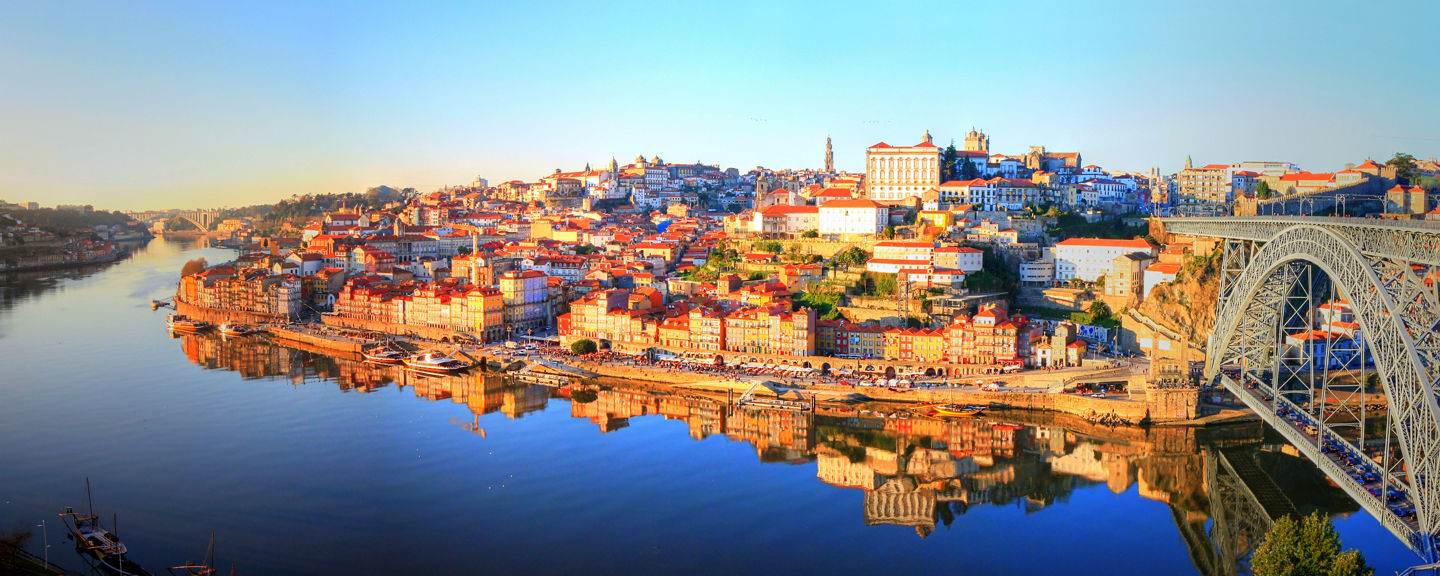
Panoramic view of Porto with river and bridge

Douro

On a journey spanning 557 mi. (896 km), the Douro River begins its leisurely course in north-central Spain, passing ancient towns and navigating narrow canyons to reach the border of Portugal. There is a train that follows the Douro along the majority of its spectacular route, but it is only by traveling on the river itself that you can fully appreciate the mighty landscapes that the water has carved out over time.

Once in Portugal, the river winds its way through historic cities and towns like Porto, Régua and Pinhão. Many of the notable buildings that line the riverbank around Porto’s historic center have connections with the great wine-producing industry that is at the very heart of the Douro Valley. Wine has been produced in the area for more than 2,000 years, but it was not until 1756 that the industry became organized and internationally recognized. Further evidence of the wine trade’s dominance in these parts can be found across the river from Porto—in the city of Vila Nova de Gaia, which is home to the famous port wine cellars.

Farther upstream in the Alto Douro Wine Region, recognized by UNESCO in 2001 as a World Heritage Site, winding roads pattern the landscape, leading up to wonderfully lush vineyards in which many grapes are still picked by hand and crushed by foot. Gleaming white quintas, or wine estates, are visible from the river and offer a tempting glimpse of a traditional way of life that has existed for centuries.

Situated in the demarcated Douro Region, in the charming vineyard town of Favaios, Quinta da Avessada is an ancient site that has long produced one of the richest wines of the Douro region. The area’s famous port wine has been cultivated for more than 300 years, beloved for its characteristic full-bodied sweetness. According to the guidelines established by the European Union’s Protected Designation of Origin, only wine produced in the Douro Valley may be labeled “port” or “porto” (although this is not required in the US).

The Douro River region is home to more than just people. Over the centuries, the river has carved magnificent gorges into the Portuguese landscape near the Spanish border. These steep banks, known as arribas, provide a haven for all sorts of wildlife that live off the river’s ecosystem. Golden and Bonelli’s eagles, black storks, and Griffon and Egyptian vultures can be seen soaring through the air or keeping watch from nests built high in the rocks along the hillsides. On the ground, endangered Iberian wolves roam the land, keeping the wild boar population in check, while wildcats search for grouse or rabbits and deer and ibex forage in the forests.

Scenic river valley with terraced vineyards
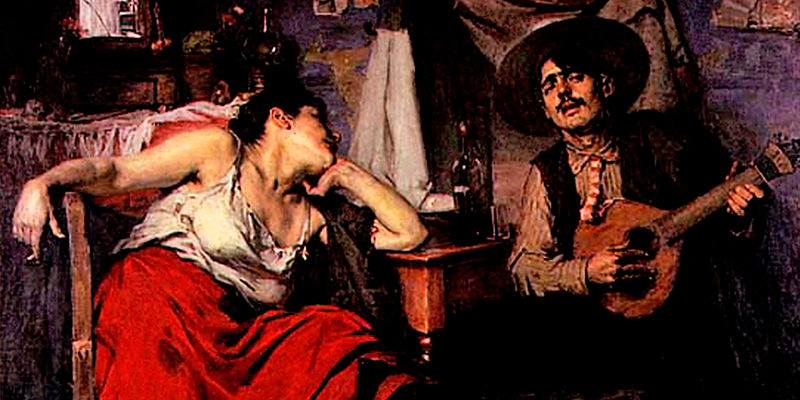
  • Woman listening to man playing guitar

    Fado

    Recognized as an expression of Intangible Cultural Heritage by UNESCO in 2011, fado is a Portuguese musical style known for its emotional intensity, poetic lyrics and haunting melodies. Fado has been performed in the streets, taverns and neighborhoods of Lisbon for nearly two centuries and remains one of the country's most cherished cultural expressions.

    Its origins can be traced to the working-class districts of Lisbon during the early 19th century, particularly in neighborhoods such as Alfama, Mouraria and Bairro Alto. Historians believe fado emerged from a blend of influences, including Portuguese folk traditions, Afro-Brazilian musical styles and songs brought to the city by sailors, merchants and immigrants. As a bustling Atlantic port, Lisbon served as a meeting point for cultures from Europe, Africa and South America, helping shape the music’s unique sound.

    The name derives from the Latin term fatum, meaning "fate" or "destiny," themes that frequently appear in its lyrics. Many songs explore love, loss, longing and saudade, a uniquely Portuguese concept expressing a deep sense of yearning for something absent or unattainable. This emotional depth is what gives fado its enduring appeal.

    Traditionally, the performances center on a solo singer, known as a fadista, accompanied by a classical guitar and the Portuguese guitar—a distinctive, pear-shaped 12-string instrument. Performances often take place in intimate venues known as casas de fado, where audiences listen in respectful silence as singers convey stories of destiny, heartbreak and hope.

    One of the genre’s most influential figures was Amália Rodrigues, often called the "Queen of Fado." During the mid-20th century, she helped transform a local Lisbon tradition into a globally recognized art form. Her recordings and performances remain highly influential today, and visitors can learn about her legacy at the Casa-Museu Amália Rodrigues, a museum that was established in her longtime home.

    Today, fado continues to thrive in Lisbon. Passed down through generations, it remains a living tradition that connects the city to its past while continuing to evolve. The genre continues to gain international recognition through acclaimed artists such as Ana Moura, one of Portugal’s most celebrated fado singers and the godmother of the Viking Hemming. Whether heard in a centuries-old tavern in Alfama or on a concert stage, this rich cultural tradition offers visitors a powerful expression of Lisbon’s history, passion and enduring spirit.

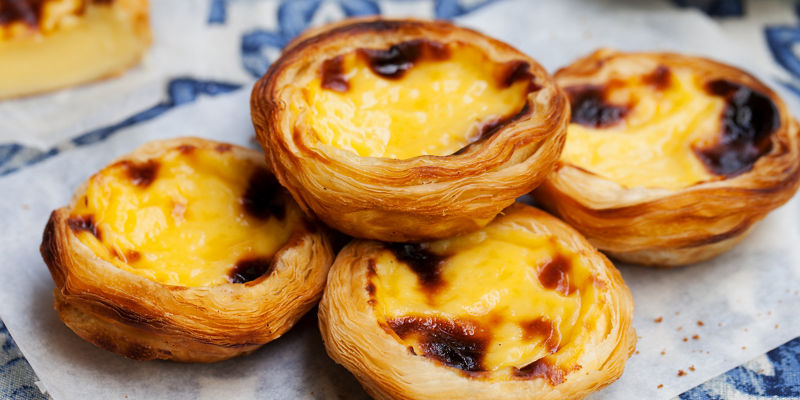
  • Golden Portuguese custard tarts on paper

    Pastel de nata

    Few foods are more closely associated with Lisbon than the pastel de nata, Portugal’s famous custard tart. With its crisp, flaky shell and creamy custard filling caramelized to golden perfection, this beloved pastry has become a symbol of Portuguese culinary culture and an essential part of any visit to Lisbon.

    The origins of the pastel de nata can be traced to the Jerónimos Monastery in the Belém district. During the 18th and early 19th centuries, monks used large quantities of egg whites to starch clothing and linens, leaving an abundance of egg yolks. Rather than waste these ingredients, they incorporated them into a variety of desserts, eventually creating this signature treat.

    The next chapter in the dessert’s history is linked to a turbulent period during the early 19th century. In 1820, the Liberal Revolution sparked political and social reforms that gradually weakened the influence of the monarchy and the Catholic Church. In 1834, the Portuguese government dissolved monasteries and convents and confiscated many church properties. Facing the loss of their traditional sources of support, the monks began selling their pastries. Soon afterward, the recipe was acquired by a local sugar refinery, which opened a bakery in 1837 to produce the tarts commercially. That bakery, known today as Fábrica de Pastéis de Belém (Belem Pastry Factory), continues to use its closely guarded recipe and remains one of Lisbon's most famous culinary landmarks.

    Preparing pastéis de nata (the plural of pastel de nata) requires skill and precision. The recipe begins with a laminated dough similar to puff pastry, rolled into thin layers that develop into a crisp, flaky shell. The filling is made from egg yolks, milk or cream, sugar and flour, cooked into a smooth custard. The tarts are then baked at very high temperatures, allowing the tops to develop the characteristic browned and lightly blistered surface that distinguishes an authentic pastel de nata.

    Today, pastéis de nata are enjoyed around the world, but Lisbon remains their spiritual home. Locals often pair them with a strong espresso, enjoying them as a morning treat or afternoon snack. Many cafés serve them dusted with cinnamon or powdered sugar, a traditional accompaniment that enhances their rich flavor. Whether sampled in a neighborhood bakery or the café of the famed Fábrica de Pastéis de Belém, the pastel de nata offers a delicious taste of Lisbon’s history, culture and enduring culinary traditions.

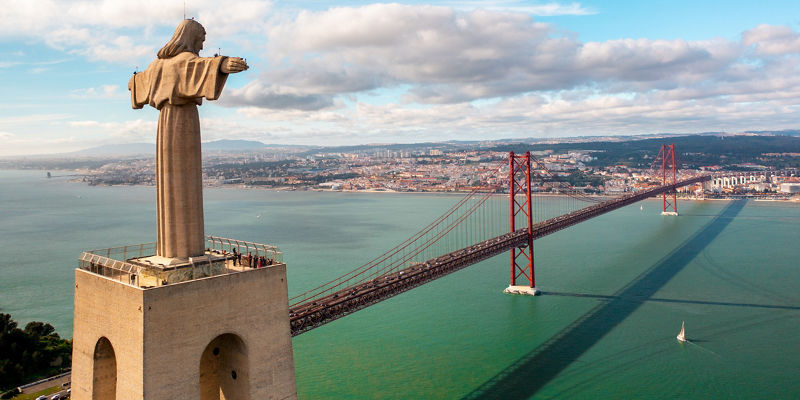
  • Christ the King statue overlooking Lisbon bridge

    Catholicism in Portugal and Spain

    With an estimated 1.2 billion members, the Roman Catholic Church is the world’s largest Christian institution. It has played a pivotal role in the history of Western civilization. For centuries, the Catholic Church was the repository of much of the Western world’s written knowledge. It continues to be the predominant religion in Portugal and Spain.

    Branches, teachings and liturgy

    While the Church teaches that its doctrine is unchanging and infallible, Catholicism does have several distinct branches, including monastic communities such as the Jesuits, Franciscans and Dominicans. The basic teachings are Trinitarian—one God made up of three divine persons: the Father, the Son (Jesus Christ) and the Holy Spirit. Catholic worship is strongly traditional and liturgical. It focuses on the Catholic Mass, during which the Eucharist is celebrated and received by baptized members of the Church.

    Education and social action

    Centering on the family unit, Catholic social teachings emphasize education and social action in the form of support for the poor and afflicted. There are many Catholic universities, schools, missions, shelters, hospitals and charitable institutions around the world.

    The church in Spain and Portugal

    By the Middle Ages, Catholicism was widespread in Iberia (Spain and Portugal), with many missions there. The Church played a significant role in the Reconquista, or “reconquest,” during which Muslims and Jews were either expelled or subsumed into the Church. Today, the influence of the Roman Catholic Church remains strong throughout the area. Approximately 81% of the Portuguese population is Roman Catholic, and 71% of Spaniards identify with Roman Catholicism.

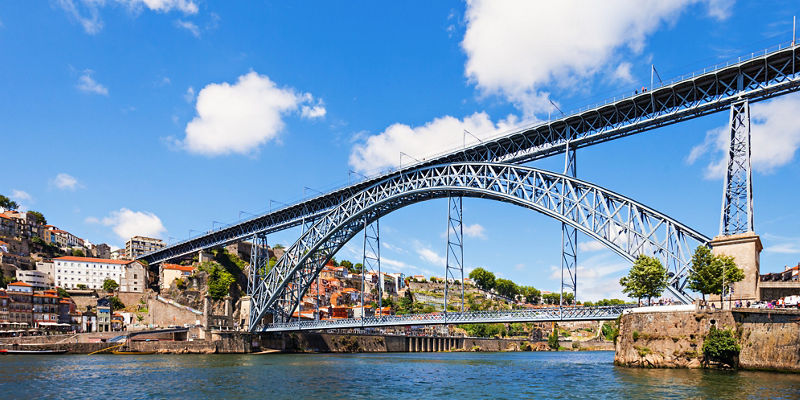
  • Steel arch bridge over river in city

    Luiz I Bridge

    Rising high above the Douro River, the Luiz I Bridge, also known as Ponte de Dom Luís I, has become one of Porto's defining landmarks. Linking the historic heart of Porto with Vila Nova de Gaia, the bridge serves as both a practical river crossing and a powerful symbol of the city's industrial heritage. Its graceful iron arch dominates the waterfront skyline, reflecting the engineering ambition and economic growth that transformed Porto in the modern era.

    The story of the bridge begins in the second half of the 19th century, a period of rapid industrialization throughout Europe. As Porto expanded and trade along the Douro intensified, the existing floating bridge connecting Porto and Vila Nova de Gaia could no longer accommodate the increased movement of people and goods. City leaders recognized the need for a solution that would strengthen the connection between the two riverbanks.

    Construction of the bridge began in 1881 under the direction of Belgian engineer Théophile Seyrig, a former business partner of Gustave Eiffel, engineer of Paris’s Eiffel Tower. Seyrig had already established a reputation as a talented designer of iron structures and proposed an ambitious plan featuring a massive wrought-iron arch, measuring 564 ft (172 m). At the time, the design represented one of the most advanced feats of engineering in Europe.

    When the bridge was completed in 1886, it was officially named in honor of King Luís I of Portugal. Although the king himself did not attend the inauguration, the structure quickly became a source of civic pride.

    One of the bridge’s most distinctive features is its two-level configuration. The upper deck was designed to connect the higher elevations of Porto and Vila Nova de Gaia, while the lower deck provides direct access to the bustling waterfront districts along the Douro. This innovative arrangement improved circulation within the city and allowed the bridge to serve a variety of transportation needs.

    Over the years, the bridge has adapted to changing patterns of travel. Horse-drawn vehicles eventually gave way to automobiles, and in the early 21st century, the upper deck was modified to accommodate the modern Porto Metro system. Today, light-rail trains share the upper level with pedestrians, while vehicles and foot traffic continue to use the lower deck.

    Beyond its practical function, the Luiz I Bridge offers some of the most spectacular views in the city. From its upper deck, visitors can admire Porto’s historic center, the wine lodges of Vila Nova de Gaia and the winding Douro River.

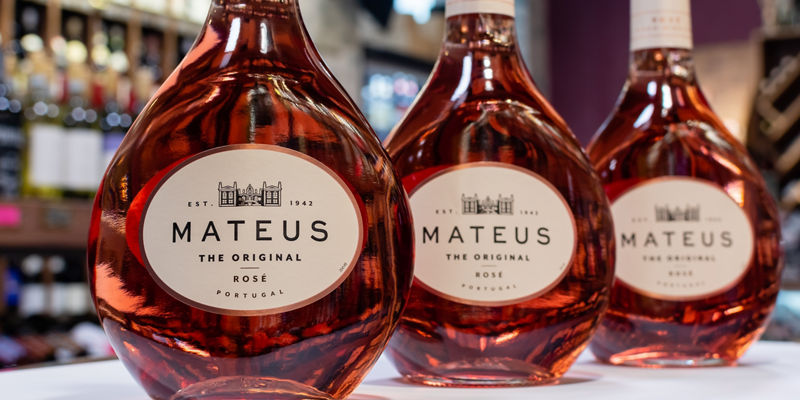
  • Mateus Rosé wine bottles on display

    Mateus Rosé

    Anyone who drank wine in the 1960s, ’70s or ‘80s probably enjoyed at least a glass or two of one of Portugal’s easy-drinking exports, Mateus Rosé. Created in 1942 during the height of World War II, Mateus founder Fernanco van Zeller Guedes combined Portuguese vinho verde grapes with French wine-making techniques to produce a rosé that was slightly bubbly, delicately sweet and pinkish in hue.

    This popular wine was originally crafted to suit Brazilian tastes, as exports to Europe were disrupted by German U-boats in the Atlantic. The sparkling nature provided crossover appeal that captured beer and soda drinkers as well as wine enthusiasts. By the late 1980s, bolstered by the introduction of a white wine version, Mateus accounted for over 40 percent of Portugal’s table wine exports and achieved global sales of more than three million cases per year.

    One of the hallmarks of Mateus, and undoubtedly a major contributor to its worldwide success, is its depiction of an opulent estate entitled “Palacio de Mateus” on its label. In truth, the building in question, which is located in Vila Real, has never played a material role in the wine’s production and is not technically a palace. According to Portuguese law, a building may be deemed a “palace” only if a member of the sovereignty has spent at least one night on its premises. The house was built during the first half of the 18th century by António José Botelho Mourão, and his descendants still live there today.

    To legally use the estate’s likeness on Mateus labels, Guedes offered the owners a choice: they could receive either a small royalty on every bottle sold or a lump sum paid up front. Their decision to accept the latter option is widely considered one of the greatest mistakes in the history of both business and wine. According to Oz Clarke’s The History of Wine in 100 Bottles, it is “still not a subject to be brought up in conversation.”

    The Mateus brand may not be as famous now as it was in its heyday, but it has enjoyed a revival since the turn of the millennium thanks to a relaunch and a subtle adjustment to the original recipe that made it slightly drier and therefore more appealing to modern palates. Despite the flavor changes, the wine is still sold in its distinctive narrow-necked, flask-shaped bottle—inspired by the water flasks traditionally worn on the hip by Portuguese soldiers during World War I—complete with the iconic Palacio de Mateus label and a real cork stopper.

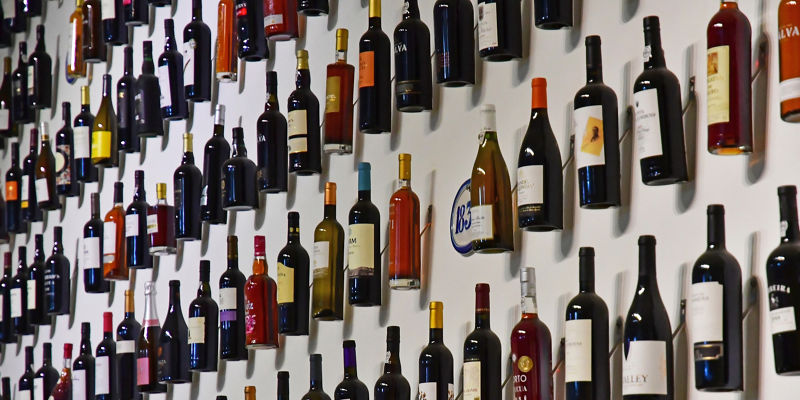
  • Wall display of assorted wine bottles

    Museu do Douro

    The Museu do Douro (Douro Museum), located in the peaceful town of Régua, provides an insightful look into Portugal’s Douro wine region. Since its founding, the museum has earned praise for its commitment to preserving the Douro’s distinctive culture and heritage. Fittingly, it occupies the former headquarters of the General Company of Agriculture and Alto Douro Vines (1756–1863), the organization that established the Douro as the world’s first demarcated wine region.

    The three-story building, reminiscent of a farmhouse and designed in the Pombaline architectural style, originally served many purposes. These included administrative and judicial functions, including developing and regulating the production and marketing of the region’s wine. Here, the company’s employees and winemakers who made the trek to Régua for its annual wine fair could also find lodging. Wine was even made and stored on-site.

    Today, the first floor that was used for wine storage holds the museum’s permanent collection showcasing various artifacts, wine labels and artwork. Once reserved for meetings, wine exhibitions and court proceedings, the second floor contains a wine bar and restaurant in what was formerly a wine-tasting room and kitchen, respectively.

  • Historical portrait with ornate cross detail

    Notable figures associated with Lisbon

    Lisbon has long been associated with influential explorers, statesmen, writers and artists whose achievements helped shape Portugal’s history and culture. From navigators who charted new sea routes to poets, musicians and reformers, these individuals reflect Lisbon’s legacy as one of Europe’s great cultural capitals.

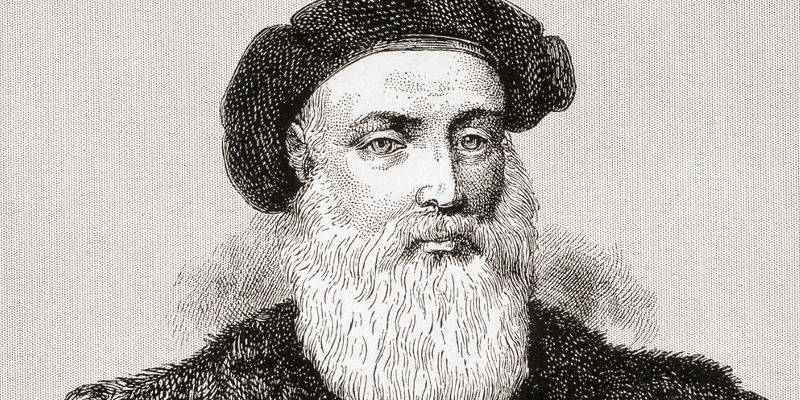
    • Prince Henry the Navigator (1394–1460)—Although he rarely undertook voyages himself, Prince Henry the Navigator was among the principal architects of Portugal’s Age of Discovery. The royal prince sponsored expeditions along the coast of Africa, promoted advances in navigation and cartography and helped establish Portugal as Europe’s leading maritime power. His vision laid the groundwork for the global explorations that transformed the city into one of the world's most important ports and centers of commerce. He is the foremost figure on Lisbon’s renowned Monument to the Discoveries.
    • Vasco da Gama (c. 1460s–1524)—One of history’s most celebrated explorers, Vasco da Gama achieved lasting fame when he led the first successful voyage from Europe to India via the Cape of Good Hope in 1498. Departing from Portugal and returning with valuable knowledge of a direct maritime route to Asia, his expedition ushered in a new era of global trade and cemented Portugal’s status as a major world power. Vasco da Gama's legacy remains deeply connected to Lisbon, where monuments and memorials commemorate his achievements, particularly in the historic Belém district.
    • King Manuel I (1469–1521)—Known as "Manuel the Fortunate," King Manuel I presided over the golden age of Portuguese exploration and prosperity. Under his reign, Portugal’s overseas trade flourished, bringing immense wealth to Lisbon. He commissioned many of the city's most enduring landmarks, including the Jerónimos Monastery and Belém Tower. The distinctive Manueline architectural style, characterized by elaborate maritime motifs and decorative stonework, bears his name and remains one of Portugal’s most important artistic contributions.
    • Luís de Camões (c. 1524–1580)—Widely regarded as Portugal’s national poet, Luís de Camões immortalized the nation’s maritime achievements in his epic poem Os Lusíadas (The Lusiads), first published in 1572. The work celebrates Vasco da Gama’s voyage to India while exploring themes of heroism, exploration and national identity. Camões is commemorated throughout Lisbon, most notably in Praça Luís de Camões, a prominent square that serves as one of the city’s cultural gathering places.
    • Sebastião José de Carvalho e Melo, Marquis of Pombal (1699–1782)—One of Portugal’s most influential statesmen, the Marquis of Pombal served as prime minister between 1756 and 1777, during the reign of King José I. Following the catastrophic Lisbon earthquake of 1755, he directed one of the most ambitious urban reconstruction projects in European history. The wide avenues, orderly street grids and elegant squares of downtown Lisbon owe much to his leadership.
    • Fernando Pessoa (1888–1935)—Fernando Pessoa transformed Portuguese literature through his innovative writing and creation of more than 75 literary alter egos, which he referred to as his "heteronyms.” Much of his life was spent in Lisbon, where he worked, wrote and frequented the city's cafés. His poetry and prose explored identity, philosophy and modernity, earning him international recognition and securing his place as one of Portugal’s greatest writers. For visitors to Lisbon, the two works most associated with Pessoa are The Book of Disquiet—a “factless autobiography” published posthumously in 1982—and Mensagem (1934), a collection of poems celebrating Portugal's history, heroes and maritime achievements.
    • Amália Rodrigues (1920–1999)—Often called the "Queen of Fado," Amália Rodrigues elevated Portugal’s traditional musical genre to international prominence. Born in Lisbon, she became the defining voice of fado during the 20th century, captivating audiences with her expressive performances and emotional interpretations of songs centered on love and longing. Her legacy continues to be celebrated throughout Lisbon, particularly in the historic neighborhoods of Alfama, Mouraria and Bairro Alto, where fado continues to thrive today.
  • Engraving of King John I and Queen Philippa effigies

    Notable figures associated with Porto

    Porto has long been home to influential writers, artists and architects whose achievements have helped shape Portuguese identity. From the leaders who helped launch the Age of Discovery to internationally acclaimed creative visionaries, these individuals reflect Porto's enduring legacy of innovation, cultural achievement and global influence.

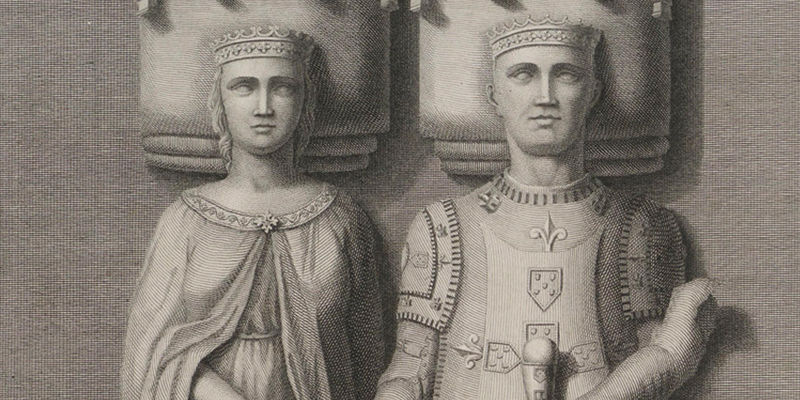
    • John I of Portugal (1357–1433) & Philippa of Lancaster (1360–1415)
      King John I of Portugal and his wife, Philippa of Lancaster are among the most significant royal figures associated with Porto. Their marriage, celebrated in Porto Cathedral in 1387, symbolized the strengthening of the Anglo-Portuguese Alliance, one of the world's oldest diplomatic partnerships, which is still in effect today. Philippa brought English courtly traditions to the Portuguese royal household, and the noble couple raised the "Illustrious Generation" of princes whose leadership helped define Portugal's golden age of exploration.
    • Prince Henry the Navigator (1394–1460)
      Born in Porto at the Casa do Infante, Prince Henry the Navigator became one of the most influential figures of the Age of Discovery. Although he rarely undertook voyages himself, he sponsored expeditions, encouraged advances in navigation and cartography and supported the exploration of the West African coast. His efforts helped establish Portugal as a leading maritime power and opened new routes for trade and exploration. Today, visitors can explore the Casa do Infante, where the prince was born, and learn more about the city’s role in launching Portugal's era of expansion.
    • Camilo Castelo Branco (1825–1890)
      One of the country’s greatest novelists, Camilo Castelo Branco was a prolific writer whose works helped define 19th-century Portuguese literature. Known for his passionate storytelling, vivid characters and dramatic themes, he captured the complexities of Portuguese society through more than 250 published works. His celebrated novel Amor de Perdição (1862) remains one of Portugal's literary classics. Castelo Branco's personal life was often as dramatic as his fiction, including a period of imprisonment in Porto, after he was accused of adultery with a married woman.
    • Manoel de Oliveira (1908–2015)
      Born in Porto, Manoel de Oliveira remains one of Portugal's most acclaimed film directors. His extraordinary career spanned more than eight decades, during which he developed a distinctive artistic style that blended history, philosophy and social commentary. Many of his movies drew inspiration from Porto and featured the city's neighborhoods, architecture and riverfront landscapes. Some of his most acclaimed films include Past and Present (1971), Benilde or the Virgin Mother (1975) and Doomed Love, a 1978 adaptation of Castelo Branco’s novel Amor de Perdição.
    • Álvaro Siza Vieira (b. 1933)
      Regarded as one of the world's foremost contemporary architects, Álvaro Siza Vieira is the leading figure of the internationally renowned School of Porto. Celebrated for his elegant, minimalist designs and sensitive integration of architecture within the surrounding landscape, Siza has received many of the profession's highest honors, including the Pritzker Architecture Prize. His work can be seen throughout Porto and beyond, most notably at the Serralves Museum of Contemporary Art.
  • Two glasses of red wine on barrel

    Port wine

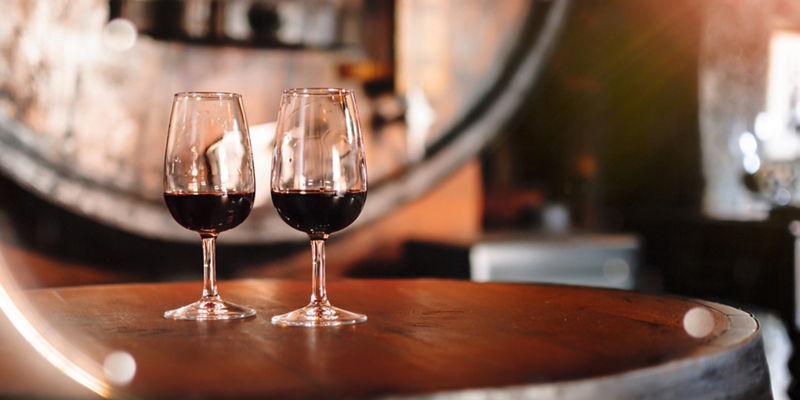
    Port wine traces its roots to the picturesque Douro River Valley of northern Portugal, where centuries of tradition have shaped its rich character and complexity. The region had been known for wine since ancient times, but port emerged as a distinct product during the 17th century. Frequent political and military conflicts between England and France disrupted Britain's access to French wines, prompting English merchants to seek alternative suppliers. Portugal became a natural trading partner.

    Transporting wine across long sea voyages, however, presented challenges. To stabilize the wine and preserve its quality, producers began adding a small amount of grape spirit during fermentation. This process halted fermentation before all the natural sugars were converted to alcohol, resulting in a fortified wine that was both stronger and sweeter than traditional table wines. The style proved immensely popular in Britain and helped launch port's international reputation.

    The city of Porto, which gave this iconic fortified wine its name, played a vital role in the beverage’s success. Located near the mouth of the Douro River, Porto became the commercial center for the port wine trade. For centuries, barrels of wine were transported downriver from the vineyards of the Douro Valley to the riverside district of Vila Nova de Gaia, directly across from Porto’s historic center. There, merchants aged, blended and stored the wines before shipping them to markets around the world.

    Today, visitors to Porto can still see the famous wine lodges that line the waterfront. Many of the most renowned port houses, including Taylor’s, Graham’s and Sandeman, offer tours and tastings that introduce guests to the traditions behind the wine.

    Port wine comes in several distinctive styles. Ruby port is youthful and fruit-forward, known for its deep color and vibrant berry flavors. Tawny port is aged longer in wooden casks, developing notes of caramel, nuts and dried fruit. Vintage port, considered the pinnacle of quality, is produced only in exceptional years and has the ability to age gracefully for decades. Other styles, including white port and rosé port, offer lighter and more contemporary expressions of this classic wine, and they pair well with local seafood dishes.

    Port wine remains a symbol of Portuguese craftsmanship and hospitality, and each glass tells a story of exploration, trade and tradition. Its enduring appeal continues to connect modern wine lovers with one of Portugal’s most treasured cultural legacies.

  • Scenic vineyard overlooking river valley

    Portugal’s Douro River

    One of the major rivers of the Iberian Peninsula, the Douro gets its name from the ancient Celtic tribal word for water. It runs about 560 miles from its source in north-central Spain through Portugal, to its outlet at Porto on the Atlantic Ocean. The Douro is wild and meandering; only certain sections of it are navigable by small river vessels.

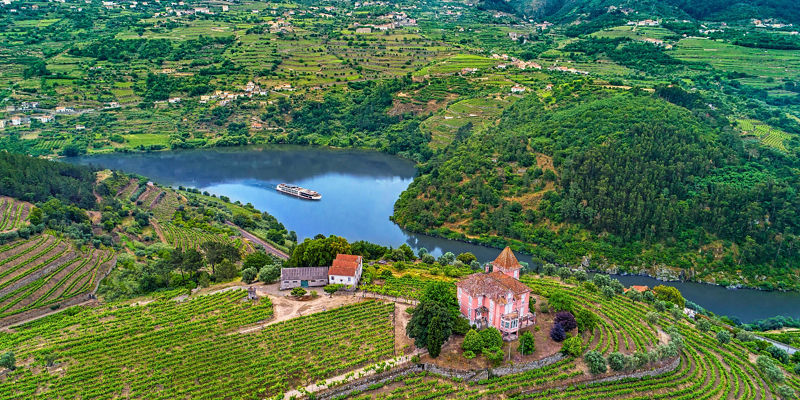
    The picturesque Douro River Valley

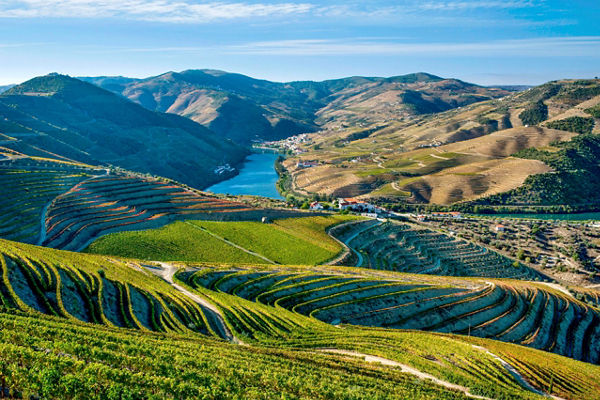
    Beautiful and unspoiled, the Douro River Valley is a productive microclimate for olives, almonds and grapes. Scenery along the river is picturesque, from terraced vineyards to quaint towns to traditional rabelo sailing boats carrying casks of port wine. The area around Pinhão is considered to be the cradle of port wine, with wine-producing quintas (farms) dotting the banks along the river.

    Fauna, freshwater fish and electricity

    The Douro River Valley’s hilly landscape and dry, warm climate are not only excellent for viticulture, but also for fauna that are unique to the area. The river itself is home to a wide variety of freshwater fish. The Douro is quite narrow in parts, and fluctuating water levels have historically limited river travel. But now there are five dams on the Portuguese section of the river, which not only help stabilize water levels, but also produce hydroelectric power. The dams have made it possible for river cruises through the Douro River Valley.

  • Close-up of peeling bark on tree trunk

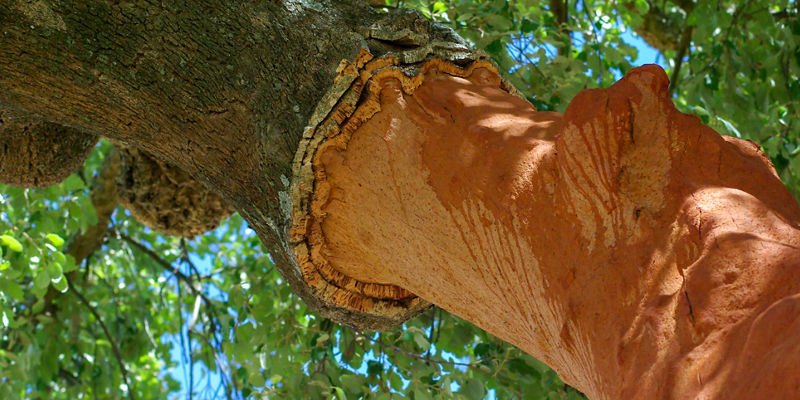
    Portuguese cork

    The next time you hear the satisfying pop of a cork leaving a bottle, remember that it was probably made in Portugal. Nearly half of the world’s cork production hails from this bountiful country, and cork alone accounts for a substantial share of Portugal’s total foreign income derived from trade. Its three primary consumer markets are the US, the UK and Germany, which together absorb about 70 percent of the total.

    This remarkable material originates from the cork oak tree, which has developed its signature thick layer of bark over time as an adaptation to southwestern Europe’s long history of drought, bush fires and temperature fluctuations. This tree covers a significant portion of Portugal’s landscape and makes up more than a quarter of its forests. Cork is astonishingly lightweight, with 50 percent of its volume consisting of pure air. It is the only readily available solid on Earth that, when compressed on one side, does not increase in volume on the other. It is also elastic, waterproof, fire-retardant and abrasion resistant. However, its most noteworthy property is its renewability.

    It takes about 25 years for a cork oak tree to be ready for harvesting. After that, the bark can be collected again every nine years. This is due to the fact that cork naturally regenerates, so one tree can produce a lifetime of harvests. Since some trees live up to 150 years, it is little wonder that cork plays such a vital role in Portugal’s economy.

    Cork harvesting is a highly specialized craft. Two cork strippers work in tandem, carefully chopping and peeling the bark from the tree’s trunk. The process remains entirely manual, relying on a steel axe that harvesters use to measure the bark’s thickness, listening for the sound it produces. Due to the skill and precision involved, cork harvesting is the highest-earning sector of Portugal’s agricultural industry.

    From fishing boats to floor tiles, durable cork has served many purposes over the centuries, even providing ship-building materials for the vessels used by Portuguese explorers during the Age of Discovery. Nevertheless, it was an Englishman, Robert Hooke, who discovered that cork provides the perfect seal for wine bottles—surely an idea worthy of a toast.
Douro Highlights

Cruise through the Douro River Valley, the world’s oldest demarcated wine region, and immerse yourself in Portugal’s stunning landscapes and rich cultural traditions. Here are some highlights you may experience as you sail along the “River of Gold”:

  • Explore Porto’s UNESCO-listed city center
  • Listen to the soulful melodies of fado music
  • Visit Coimbra, Portugal's oldest university town
  • Tour the 14th-century Santa Maria da Vitoria Monastery
  • Sample award-winning port wines
  • Discover the extraordinary Mateus Palace
  • See traditional Portuguese tiles in charming Pinhão
  • Journey through the stunning Alto Douro Wine Region
  • Walk the winding lanes of charming Marialva
  • Wander through Castelo Rodrigo, a 16th-century village

Destination Insight Videos

Scenic view of Porto riverside architecture

Portugal’s Wine Country (3:06)

In 1756, Portugal’s Douro River Valley became the world’s first protected wine-producing region, and today is a UNESCO World Heritage Site. Learn more about the region’s famous port wine.

Three wine glasses with red wine on table

History of Port Wines (3:58)

Take a journey with Karine as she explores Portugal’s history of wine and gains insight into its production and the various types of port, with a local expert on hand.

Traditional music performance with red shawl

Fado, Music of Portugal (2:36)

Learn about the dramatic songs of fado, born along Portugal’s waterfront. This music of passion often depicted the longing of women waiting for their men to return from sea.

Chefs preparing food in a commercial kitchen

Portuguese Crème Brûlée (3:07)

Go behind the scenes with Karine to see how easy it is to make this local variation of everyone’s favorite dessert. You may want to take notes during this hands-on demonstration!

Douro Travel FAQ

Due to its temperate climate, Portugal is an excellent year-round destination. Spring and fall offer cooler weather and fewer crowds, while summer offers longer daylight hours for sightseeing. The annual Douro Valley wine harvest takes place from late August to October, with peak activity during September.

With its mild Atlantic climate and abundant sunshine, Lisbon is an inviting destination throughout the year. The “quiet season,” which spans from autumn to spring, offers a gentler pace, with pleasant temperatures and fewer visitors. Summer (June through August) brings warm, sunny days ideal for outdoor cafés, scenic tram rides and strolls along the Tagus River. Winter lends a leisurely charm to the Portuguese capital, with festive lights, seasonal markets and fado performances in cozy venues.

With its mild Atlantic climate and riverside charm, Porto is inviting year-round. The “quiet season,” which spans from autumn to spring, offers pleasant temperatures and fewer crowds, while summer brings sunny days perfect for exploring the Douro waterfront and outdoor cafés. Winter adds a cozy atmosphere with festive lights, seasonal markets and welcoming wine cellars.

One of the best ways to discover Lisbon is by immersing yourself in the city’s artistic and cultural traditions. You can explore the National Tile Museum, which showcases the history and craftsmanship of Portugal’s iconic azulejo tiles, and take part in a hands-on workshop to create your own designs. Alternatively, sample authentic Portuguese cuisine as you watch fado musicians perform haunting songs about love, fate and longing—a unique expression of Lisbon’s soulful heritage.

As you explore, stop at renowned overlooks such as Miradouro da Graça, Miradouro de Santa Luzia and Miradouro das Portas do Sol, all of which offer sweeping views across the Tagus River. These iconic vantage points highlight Lisbon’s dramatic hillside setting and provide some of the city’s most memorable panoramas.

The city’s distinctive character is further revealed in its historic neighborhoods, where you can embark on a guided tour on board one of Lisbon’s iconic trams. As you pass through winding streets lined with colorful buildings and decorative tiled facades, enjoy a glass of port—a signature wine of Portugal—served by a hostess dressed in a traditional costume.

Beyond the capital, travelers can visit some of Portugal’s most treasured destinations. The medieval town of Óbidos charms visitors with its cobbled streets, whitewashed houses and well-preserved walls, while nearby Sintra is renowned for its enchanting landscapes and rich history. You may also wish to discover the rococo Palace of Queluz or Fátima, one of the world’s most important Christian pilgrimage sites.

For those interested in nature, the Tagus Estuary offers a peaceful escape from the city. One of Portugal’s most important wetland ecosystems, it provides opportunities to observe migratory birds and enjoy the region’s natural beauty in a serene setting.

You can delve into Porto’s cultural heritage by exploring its UNESCO-listed historic center, where elegant baroque churches, grand civic buildings and colorful azulejo-tiled facades reflect the city’s centuries-old character. One popular walking route begins near Clérigos Tower—a prominent symbol of Porto dating from the 18th century—then continues to a lively local square, Praça da Liberdade. From there, you can walk to São Bento Railway Station and view its intricate tile mosaics. Continue via lively Rua das Flores (Flower Street) until you reach the Palácio da Bolsa, Porto’s historic stock exchange.

Another wonderful way to experience the city is on board a traditional rabelo, a boat once used to transport barrels of wine. Sail along the Douro, passing beneath some of the city’s iconic bridges, and take in stunning views of the storied buildings along the riverbanks.

Alternatively, you may enjoy a tram ride to the Ribeira neighborhood in a fully restored streetcar from the early 1900s. After taking in the sights along the riverfront, you can tour some of the city’s architectural highlights, including the magnificent Church of São Francisco.

No visit is complete without exploring one of Porto’s renowned wine cellars. Just across the river, you can also explore the town of Vila Nova de Gaia, which became a commercial center for port wine during the 13th century.

Beyond the city, you may wish to take a day trip to Braga and Guimarães, two historically significant cities that helped shape the region’s religious and cultural identity, or journey to the capital of filigree, Póvoa de Lanhoso, to see gold and silver molded into lace-thin decorative art. You may also discover the charming cities of Aveiro, known as the “Venice of Portugal,” and Coimbra, the birthplace of six Portuguese kings and home to Portugal’s first university. Wine enthusiasts can immerse themselves in local viticulture with an excursion to the Minho, one of Portugal’s largest wine-growing regions, where visitors can tour the Quinta da Aveleda winery—managed and cared for by the same family since 1870.

Yes. Lisbon is home to two UNESCO World Heritage Sites, both located in the Belém district: Jerónimos Monastery and Belém Tower. They were recognized jointly in 1983 for their outstanding representation of Portuguese art and historic ties to the Portuguese Renaissance of the 15th and 16th centuries.

One of the finest examples of Manueline architecture, the Jerónimos Monastery was commissioned by King Manuel I and begun in 1502. Closely associated with Portugal’s Age of Discovery—the country’s era of maritime expeditions—it stands near the site from which many of the nation’s great voyages departed. The monastery is also the burial place of explorer Vasco da Gama and poet Luís de Camões.

Constructed between 1515 and 1521 at the entrance to the Tagus River, Belém Tower was built to help defend Lisbon’s harbor and commemorate Vasco da Gama’s voyage to India. Today it serves as one of Portugal’s most recognizable landmarks and a symbol of the maritime achievements that helped shape the modern world.

Yes. Porto’s historic center is a UNESCO World Heritage Site. It was recognized in 1996 for its exceptional urban landscape and its importance as a center of commerce, culture and maritime trade along the Douro River. Throughout the historic center, architectural styles spanning the medieval, baroque and neoclassical eras illustrate Porto’s evolution as one of Portugal’s most important cities.

Beyond the city itself, our itineraries highlight the broader UNESCO-listed Douro Valley, where dramatic terraced vineyards have produced wine for centuries. Recognized for its cultural landscape and longstanding winemaking traditions, the valley remains one of Portugal’s most celebrated regions and a defining feature of the Porto experience.

Located at the heart of the Portuguese capital, Baixa is Lisbon’s historic downtown district and one of the city’s most visited areas. Rebuilt under the direction of the Marquis of Pombal after the devastating 1755 earthquake, the neighborhood is characterized by broad avenues, elegant squares and an orderly grid of streets. Historic squares such as Praça do Comércio and Rossio Square anchor the district, while its shops, cafés and striking architecture make Baixa an ideal starting point for your explorations.

Just uphill from Baixa are the districts of Chiado and Bairro Alto. Chiado has long been associated with many of Portugal’s leading writers and intellectuals and is renowned for its bookshops, theaters and lively shopping streets. Adjacent Bairro Alto offers a more bohemian atmosphere, with narrow streets, colorful buildings and lively gathering places. In the evening, the area comes alive as one of Lisbon’s most vibrant entertainment districts.

West of the city center lies Belém, a spacious waterfront district known for its connection to Portugal’s Age of Discovery. Many of Lisbon’s most important monuments are located here, including the UNESCO-listed Jerónimos Monastery and Belém Tower. The neighborhood is also home to broad riverside promenades, museums and famous bakeries. With its blend of maritime history, monumental architecture and open green spaces, Belém remains one of Lisbon’s most rewarding areas to explore.

Perched on a hillside overlooking the Tagus River, Alfama is Lisbon’s oldest neighborhood. One of the few areas to survive the 1755 earthquake largely intact, it retains much of its medieval street pattern, with narrow lanes, steep stairways and hidden courtyards throughout the district. Alfama is closely associated with fado music, and visitors can discover traditional taverns, historic churches and scenic viewpoints while exploring its labyrinthine streets.

Situated along the Douro River, Ribeira is Porto’s oldest and most iconic neighborhood. This UNESCO-listed riverfront quarter offers some of Porto’s most picturesque views and provides an excellent introduction to its rich maritime heritage.

Just inland from the river lies Baixa, Porto’s vibrant downtown district. Centered around broad avenues and elegant public squares such as Praça da Liberdade, the neighborhood is home to grand civic buildings, historic markets, shops and cafés. Its blend of 19th-century architecture and contemporary energy makes Baixa a popular gathering place for both residents and visitors.

Foz do Douro, located where the Douro River meets the Atlantic Ocean, offers a seaside atmosphere. Known for its scenic promenades, historic lighthouses and sandy beaches, the neighborhood provides a tranquil escape from the city center.

Across the Douro River stands Vila Nova de Gaia, a city synonymous with Portugal’s famous port wine. While it is a separate municipality from Porto, the two are closely connected with each other. For centuries, wine produced in the Douro Valley has been aged in the historic cellars that line Vila Nova de Gaia’s waterfront. Today, visitors can tour renowned wine lodges, learn about the production process and enjoy port tastings.

One of Lisbon’s most famous culinary highlights is the pastel de nata, a small egg custard tart featuring a flaky crust and a golden, caramelized top. It is often topped with cinnamon and enjoyed with coffee.

Seafood occupies an equally important place in Lisbon’s dining culture. Bacalhau, or salted cod, is widely regarded as Portugal’s national ingredient and appears in countless recipes. One of the most popular preparations is bacalhau à Brás, which combines shredded cod with onions, crispy potatoes, eggs and olives. Another local favorite is sardinhas assadas (grilled sardines), especially during Lisbon’s summer festivals, when the aroma of fresh sardines grilling over charcoal fills the city’s historic streets.

Visitors seeking heartier fare often enjoy arroz de marisco, a flavorful seafood rice dish prepared with shellfish such as prawns, clams, mussels and crab. For a quick meal, many locals turn to the bifana, a simple but satisfying sandwich made with marinated pork served in a crusty bread roll. Found in cafés and snack bars throughout the city, it remains a popular street food.

When it comes to beverages, Portuguese wines feature prominently. Vinho Verde, a light and refreshing wine from northern Portugal, pairs especially well with seafood dishes. Lisbon is also an excellent place to sample port wine, one of the country's most famous exports. Another local favorite is ginjinha, a cherry liqueur traditionally served in small glasses and often enjoyed as an after-dinner treat.

Food markets offer another excellent introduction to Lisbon’s culinary culture. The Time Out Market, housed within a historic market hall near the waterfront, brings together many of the city’s leading chefs, restaurants and food vendors under one roof. Visitors can sample everything from traditional specialties to contemporary interpretations of Portuguese cuisine while experiencing one of Lisbon’s most vibrant gathering places.

Porto is known for its hearty cuisine. The city’s signature dish is the francesinha, an indulgent sandwich layered with steak, cured meats and sausage, which is then covered in melted cheese and served with a rich tomato-based sauce. Another favorite is tripas à moda do Porto, a traditional stew of tripe, beans and smoked meats that reflects the city’s culinary heritage and gives Porto residents their affectionate nickname, tripeiros.

Salted cod features prominently on local menus as well. One of the region’s best-known specialties is bacalhau à Gomes de Sá, a Porto-born recipe that combines cod with potatoes, onions, olive oil, eggs and olives. Along the coast, grilled sardines remain a perennial favorite, particularly during the summer months when fresh Atlantic seafood takes center stage.

Visitors with a taste for pastries can enjoy Portugal’s beloved pastel de nata, a custard tart found throughout the city, as well as the regional pastel de Chaves, a flaky, savory pastry traditionally filled with seasoned meat.

Mercado do Bolhão, one of the city’s most historic markets, is a lively gathering place where visitors can browse local produce, cheeses, cured meats and other regional specialties. Together with Porto’s historic wine lodges, it provides an authentic taste of the city’s culinary culture.

No beverage is more closely associated with Porto than port, the fortified wine that has been produced in the Douro Valley. Traditionally aged in the cellars of Vila Nova de Gaia, the beverage comes in a range of styles, from fruit-forward ruby ports to complex tawny ports aged in oak casks, as well as crisp white ports, often enjoyed as an aperitif.

Vinho Verde, produced in the nearby Minho region, is prized for its crisp, refreshing character and pairs well with seafood and lighter dishes. Espumante sparkling wines are another popular choice, often served alongside local cuisine and celebratory meals.

Port wine is undoubtedly one of the most famous and popular beverages from this region. Authentic port receives its unique quality, flavor and aroma from the area’s winning combination of rocky, acidic soil, a warm, sunny climate and the sweet grapes grown along a 62-mile stretch of the Upper Douro Valley. The area gives life to many different styles of port, all of which are matured in oak casks in the various port lodges that pepper the valley. Once bottled, they are ready for drinking with no need to decant. Here are some of the popular styles of port you might like to sample while you are in the Douro region:
  • Tawny Porto—Lighter and less sweet than vintage ports, tawny port is blended from wines that are no more than three years old.
  • Aged Tawny—Amber in color, this famous port is blended from a range of wines that have been aged for 10 to 30 years.
  • Vintage Porto—Intensely red in color, this full-bodied wine is typically left in the cask for two to three years before being aged in bottles for many years more.
  • Late-Bottled Vintage—Less rich and concentrated than Vintage Porto, Late-Bottled Vintage is left in the cask for four to six years, then filtered and bottled as ready to drink.

There are many activities to enjoy on a voyage along the Douro River. Porto is a treasure chest of unusual buildings, atmospheric neighborhoods, glorious river views and charming local color—perfect for exploring. For incredible panoramic views, you can climb to the top of the bell tower of Torres dos Clérigos, a magnificent baroque church, or take the Gaia Cable Car (Teleférico) along the river. There are few things more pleasurable in the Douro Valley than relaxing with a glass of local wine while taking in breathtaking scenery, either from your ship or during a visit to one of the many esteemed wineries in the region. Along your journey, take in magnificent Manueline architecture, a 16th-century style that blends European late Gothic, Moorish-inspired Mudéjar and Italian and Flemish Renaissance influences. Superb examples can be found in the university town of Coimbra, the cathedral at Batalha, historic Guimarães and medieval Castelo Rodrigo.

Yes. The Alto Douro Wine Region is, itself, a UNESCO World Heritage Site. River voyages offer stunning views of its terraced vineyards, historic wine estates and enchanting villages. In Baltalha, you can visit the Santa Maria da Vitoria Monastery, a magnificent religious complex built in the Gothic and Manueline styles. Built over the reign of seven kings, between 1386 and 1517, the impressive convent was listed as a World Heritage Site in 1983. Founded in the 4th century BC as a Roman settlement, Porto is one of Europe’s oldest cities. Its city center—with its picturesque plazas, tiled churches and pastel-hued houses—is another notable UNESCO Site.

The Douro is Portugal’s “River of Gold” in more than just the poetic sense. It supports the wine industry, generating millions in sales revenue annually. The liquid gold of the Douro also pertains to hydropower. The river supports 66 hydropower stations which produce 50 percent of Portugal’s total hydropower. In addition, the river has 15 dams that regulate water flow, sustain reservoirs, enable navigation and control flooding.

Along the Douro River, you can explore Porto’s UNESCO-listed historic center and port wine cellars, see the 16th-century Jerónimos Monastery in Lisbon, visit grand estates like Mateus Palace and stroll through medieval towns such as Castelo Rodrigo. Discover terraced vineyards, charming villages like Pinhão and Régua and experience centuries-old wine traditions surrounding the Alto Douro region’s beautiful scenery. In Spain, you can visit the 13th-century Salamanca University.

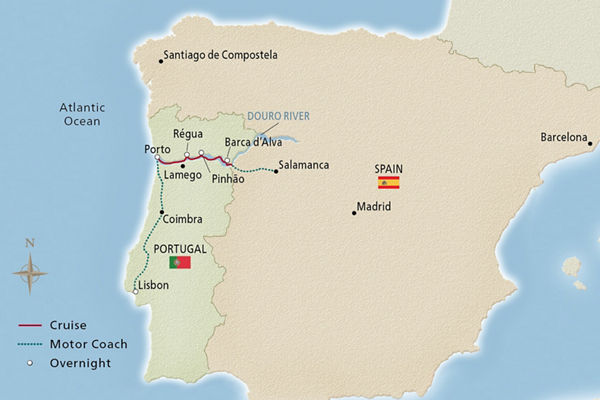
The Douro River flows through two countries, Spain and Portugal. In Portugal, you will sail through the Douro Valley, the world’s oldest demarcated wine region. Exploring these two nations allows you to witness the diverse cultures and traditions that have flourished along these scenic banks for centuries.

The Douro River stretches for about 557 mi (896 km) across the Iberian Peninsula, carving through valleys and hillsides synonymous with fine wine production.

The Douro River originates in north-central Spain near Duruelo de la Sierra and travels southwest through the Iberian Peninsula. The river concludes its 557-mi (896 km) course as it joins the Atlantic Ocean near the historic city of Porto.

As you sail through the Douro International Natural Park, you may observe soaring birds of prey and other native wildlife. The dramatic scenery near Barca d'Alva provides a habitat for these creatures among striking rock formations. While the region is best known for its viticulture, the natural landscapes remain vibrant.

During your voyage, you can explore quintas, traditional wine estates, and learn about the ancient wine-making process of the region. You may visit a local bakery in Favaios to see how fresh bread is crafted. Cross into Spain to explore Salamanca, a UNESCO-listed university city rich in Renaissance architecture and academic heritage. Scenic sailing along the river allows you to take in terraced vineyards and charming villages. These immersive activities provide a connection to the authentic culture and traditions of Portugal.

Sample tawnies and rubies at a world-renowned port wine cellar, and enjoy tastings of cheese, olive oil, breads and regional specialties, often paired with wines in authentic settings. In Favaios, taste fresh bread from a traditional wood-fired oven.  On board, discover destination-focused dining and cultural performances that immerse you in the flavors and culinary traditions of Portugal’s renowned wine country.

All-Inclusive Itineraries—Douro

Choose one of our enriching, all-inclusive voyages and discover the many benefits of exploring in Viking comfort.
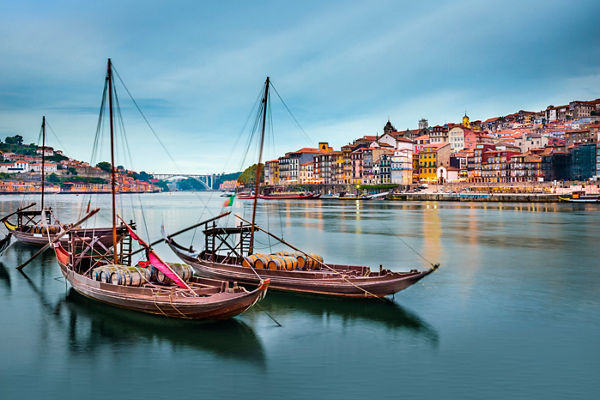
Traditional boats on serene river in Porto
Hide map Show map

Portugal’s River of Gold

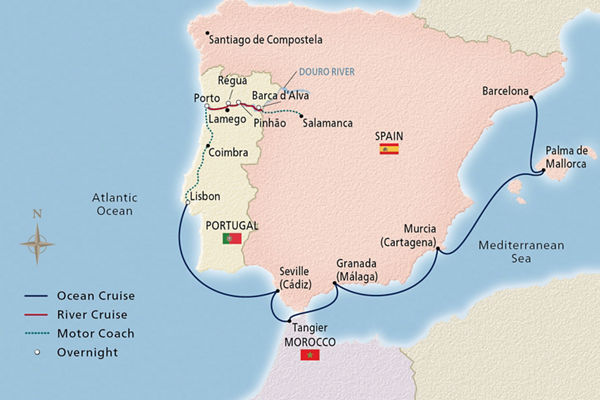
Lisbon to Porto
Reduced Airfare | Special Fares | $25 Deposit

10 days
8 tours
2 countries
$5,899 from
  • Learn More
  • PRICE & BUILD
Scenic vineyard terraces overlooking a river valley
Hide map Show map

NEW! Iberian Odyssey

Barcelona to Porto
Reduced Airfare | Special Fares | $25 Deposit

17 days
14 tours
3 countries
$10,698 from
  • Learn More
  • Request a Quote
View Cruises

Sign up to receive updates from Viking

Stay current with special offers, news and destination-focused content.

SIGN UP
Call Viking at
Call Viking at 1-800-304-9616
1-800-304-9616
TAP TO CALL
Viking Cruises Viking

Footnote

*FREE airfare on select departures of Grand European Tour; Capitals of Eastern Europe; Lyon Provence & the Rhineland; London, Paris & D-Day; Pharaohs & Pyramids; European Sojourn; Christmastime in Paris & Normandy; Magnificent Mekong; Antarctic Explorer; Argentina & the Chilean Fjords; Canadian Discovery; Chilean Fjords & Scenic Shores; Great Lakes Collection; Great Lakes Treasures; Into the Antarctic Circle; Niagara & the Great Lakes; Niagara & Great Lakes Treasures; Panama & Scenic South America; Panama Canal & the Americas; Grand Australia Circumnavigation; select World Cruise Products.
  • Company Information

    • Contact Us
    • Speak with a Viking Agent
    • Order a Brochure
    • Special Offers
    • Sweepstakes
    • Travel Advisors
    • FAQ
    • Media Center
    • About Us
    • Investor Relations
    • Careers
    • Site Map
    • Legal
    • Terms of Use
    • Privacy Policy
    • Cookie Policy
  • Viking River Cruises

    • Europe
    • Asia
    • Egypt
    • Mississippi
  • Viking Ocean Cruises

    • Scandinavia
    • British Isles & Ireland
    • North America
    • Caribbean & Central America
    • South America
    • Mediterranean
    • Quiet Season Mediterranean
    • Asia
    • Australia & New Zealand
    • World Cruises
    • Grand Journeys
  • Viking Expeditions

    • Antarctica
    • The Arctic
    • Great Lakes
    • North America
    • South America
    • Grand Journeys
    • Longitudinal World Cruises

© Viking Cruises, 2026. All Rights Reserved.

Footnote

*FREE airfare on select departures of Grand European Tour; Capitals of Eastern Europe; Lyon Provence & the Rhineland; London, Paris & D-Day; Pharaohs & Pyramids; European Sojourn; Christmastime in Paris & Normandy; Magnificent Mekong; Antarctic Explorer; Argentina & the Chilean Fjords; Canadian Discovery; Chilean Fjords & Scenic Shores; Great Lakes Collection; Great Lakes Treasures; Into the Antarctic Circle; Niagara & the Great Lakes; Niagara & Great Lakes Treasures; Panama & Scenic South America; Panama Canal & the Americas; Grand Australia Circumnavigation; select World Cruise Products.

Company Information

  • Contact Us
  • Speak with a Viking Agent
  • Order a Brochure
  • Special Offers
  • Sweepstakes
  • Travel Advisors
  • FAQ
  • Media Center
  • About Us
  • Investor Relations
  • Careers
  • Site Map
  • Legal
  • Terms of Use
  • Privacy Policy
  • Cookie Policy

Viking River Cruises

  • Europe
  • Asia
  • Egypt
  • Mississippi

Viking Ocean Cruises

  • Scandinavia
  • British Isles & Ireland
  • North America
  • Caribbean & Central America
  • South America
  • Mediterranean
  • Quiet Season Mediterranean
  • Asia
  • Australia & New Zealand
  • World Cruises
  • Grand Journeys

Viking Expeditions

  • Antarctica
  • The Arctic
  • Great Lakes
  • North America
  • South America
  • Grand Journeys
  • Longitudinal World Cruises

Call Viking at Call Viking at 1-800-304-9616 1-800-304-9616 Viking Cruises Viking
© Viking Cruises, 2026. All Rights Reserved.

2026-2030 RIVER CRUISE AND AIR FARES: Offer applies to bookings made from September 1-30, 2026. Terms & conditions for select promotions may vary. $25 deposit is applicable to all River itineraries. Special fares plus up to FREE International airfare valid on select departures of Grand European Tour, Lyon Provence & the Rhineland, European Sojourn,  Capitals of Eastern Europe, London, Paris & D-Day, Pharaohs & Pyramids, Magnificent Mekong, Christmastime in Paris & Normandy.  Airfares may vary on other gateways & departures. Airfare does not have to be purchased to get cruise\cruisetour offer. All prices are in CA dollars and for CA residents only. Additional restrictions may apply.

2026: Pay in full by September 30, 2026, or 120 days prior to departure (whichever comes first)
2027: Pay in full by November 19, 2026, or 120 days prior to departure (whichever comes first)
2028: Pay in full by April 8, 2027
2029: Pay in full by February 17, 2028
2030: Pay in full by October 12, 2028

Offer may be withdrawn at any time without prior notice. Offers Expires September 30, 2026.

$25 DEPOSIT: For itineraries 35 days or less, a $25 deposit applies to February 2027 & onward departures; for itineraries greater than 35 days, a $25 deposit applies to April 2027 & onward departures; World Cruise products excluded; call for details.

AIR UPGRADE: Upgrade to Premium Economy or Business at additional cost based on select gateways and dates. Additional airline-imposed baggage charges may apply; for more information visit Airline Luggage Restrictions. Air prices are per person based on cruise/cruisetour check-in date and include transfers plus all government taxes/fees of approximately $160 and air fuel surcharges. Air seats are limited; airfares are subject to change and are not guaranteed until full payment of air is received. For more information about customized air services and US gateways, visit the Viking Air Plus page.

To learn more about allowances and general airline information visit Airline Information & Restrictions.

AIR OFFER RESTRICTIONS: Offer expires September 30, 2026.

GENERAL RESTRICTIONS: Cruise fares listed are cruise only in CAD dollars, per person, based on double occupancy and for CA residents only. All fares and offers are for new bookings made September 1, 2026 to September 30, 2026, are subject to availability; may not be combinable with other offers except Viking Explorer Society Credit. Special cruise fares are based upon published full cruise fares; cruise fares do not include prepaid charges, optional facilities, and personal charges, as defined in the terms and conditions of the Passenger Ticket Contract which may be viewed elsewhere on this website. Full cruise fares may not have resulted in actual sales in all stateroom categories and may not have been in effect during the last 90 days. Promotional fares may remain in effect after the expiration date. Air promotion applies to economy, roundtrip flights only from select Viking River Cruises CA gateways and includes airport-to-ship or hotel transfers, air taxes and air fuel surcharges. Viking reserves the right to correct errors or omissions and to change any and all fares at any time. For up-to-date prices, please call Viking or your Travel Agent. Additional terms and conditions may apply. Complete terms and conditions may be found in the Passenger Ticket Contract.

NOTE: North American flights depart one day prior to check-in date. Paid Business or Premium Economy Class may require travel in economy on flights within North America or Europe. Premium economy is limited to specific airlines and we may not be able to accommodate based on aircraft type and availability. Roundtrip airport transfers are included when air is purchased with a cruise or cruisetour package; if air is not purchased from Viking, transfers may be purchased separately. All transfers must be in conjunction with a Viking-purchased cruise, cruisetour, land extension or extra hotel nights. Air prices are per person based on cruise/cruisetour check-in date and include transfers plus all government taxes/fees of approximately $160 and air fuel surcharges. Air seats are limited; airfares are subject to change and are not guaranteed until full payment of air is received.