

Set sail for Asia
Immerse yourself in Asia’s captivating history & traditions. Read on to learn more about the distinctive countries that comprise this storied region and uncover the unforgettable experiences that await you in Japan, Cambodia, Indonesia and beyond. Discover the fresh ingredients used to prepare Vietnamese summer rolls, trace the history of China’s tea culture and explore why Thailand is an ideal destination for nature enthusiasts.
Asia
Asia is the world’s largest and most diverse continent, occupying four-fifths of the Eurasian landmass, or approximately 17.2 million sq mi. (44.6 million sq km). Asia possesses the longest coastline of any continent, contains both the highest and lowest points on Earth’s surface and has the widest climatic extremes. As a result, Asia produces the largest variety of vegetation and animal life of any continent. For example, Siberia has warm but short summers and long, intensely cold winters, while Southeast Asia has a tropical climate that is hot and humid year-round. Overall, the majority of Asia has a continental climate, characterized by an extreme annual range of temperature across seasons.
Asia is the birthplace of several of the world’s major religions and hundreds of minor ones. As such, this region is home to historic temples, iconic landmarks and cultural treasures including:
- Tokyo’s Meiji Jingu, a Shinto shrine dedicated to the deified spirits of the first emperor of modern Japan and his wife, Empress Shōken
- China’s impressive Terra Cotta Warriors in the ancient, fortified city of Xian
- Hong Kong’s Wong Tai Sin Temple, a colorful Taoist shrine located in the heart of the city
- Potala Palace in Tibet, a 13-story structure that was home to the Dalai Lama for more than 1,000 years
- Angkor Wat in Cambodia, a 12th-century temple that is now a UNESCO World Heritage Site
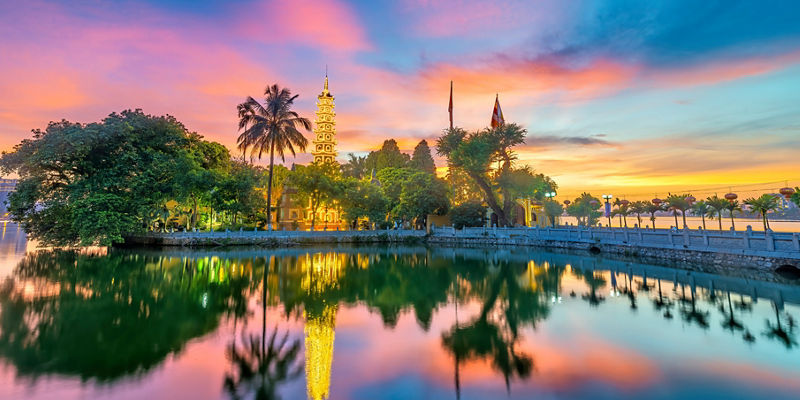
- Jade Emperor Pagoda, an ornate sacred site in Vietnam’s vibrant Ho Chi Minh City
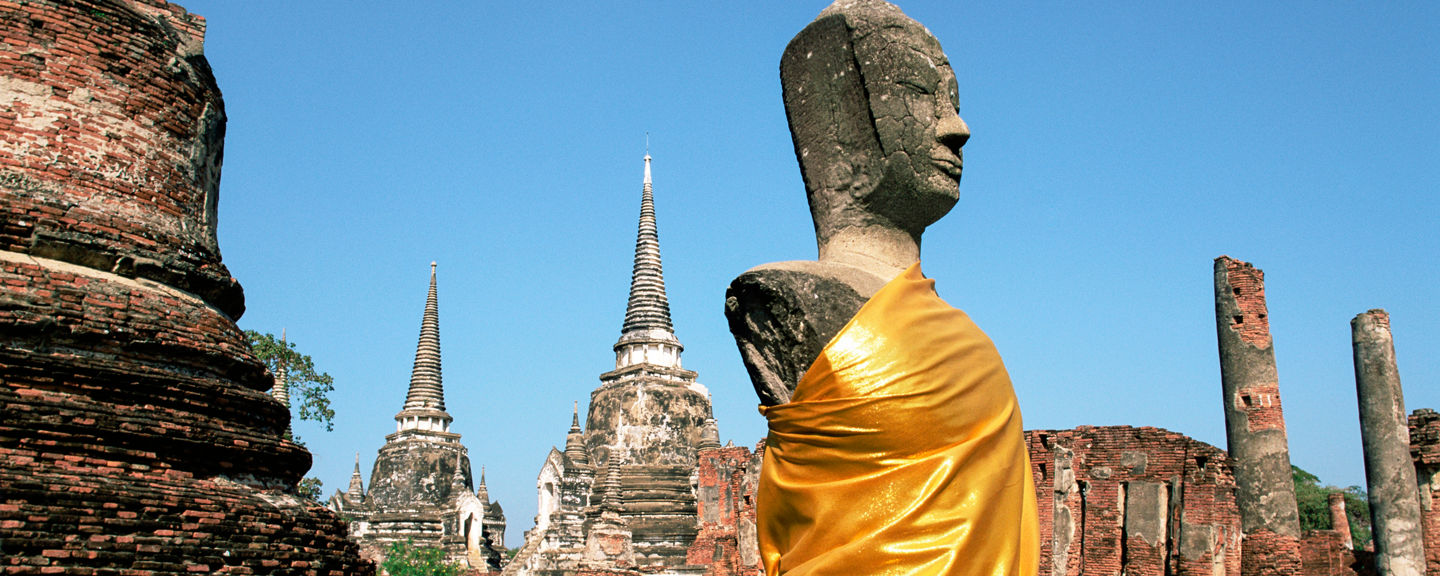
- Ayutthaya, Thailand’s majestic ancient capital and a UNESCO World Heritage Site
- Indonesia’s Komodo National Park, home to the largest living lizard species, the remarkable Komodo dragon
- Gardens by the Bay, Singapore’s futuristic horticultural park featuring more than one million plants

-
Buddhism, then and now
Achieving nirvana through enlightenment
While Buddhism’s popularity in India has waned, it continues to thrive in Asia with estimates of 324 million Buddhists worldwide.
Buddhism was born on the Indian subcontinent and is based largely on teachings attributed to Siddhartha Gautama—commonly known as “the Buddha” (meaning “the awakened one” in Sanskrit and Pāli). The Buddha lived and taught in the eastern part of the Indian subcontinent circa 563 BC-483 BC and is recognized as an enlightened teacher who helped sentient beings end suffering and achieve the highest level of happiness.
The rise of Buddhism
Around 250 BC, the Indian emperor Ashoka the Great embraced Buddhism after witnessing the horrors of war. It gave him such a sense of peace that he wanted to share its principles with as many people as possible, and so he sent Buddhist missionaries to faraway countries including China, Sri Lanka, Malaysia and even Greece.
As Buddhism began to spread outward from India, different practices took shape. Theravada Buddhism is based on the idea that everyone must seek enlightenment on their own behalf. Mahayana, or “Great Vehicle” Buddhism, allows for the existence of bodhisattvas—beings who seek buddhahood, or perfect enlightenment, on behalf of all sentient beings. Vajrayana, or tantra, is widely practiced in Tibet and Mongolia and includes visualization, the chanting of mantras, study with a guru, the use of mandalas and yoga practice.
A shared goal through varied practice
Though schools of Buddhism vary on their approach, all agree that the shared goal is nirvana—peace or stillness of mind—and liberation from samsara, the karmic cycle of rebirth, plagued as it is by pain, desire and ignorance. The three “jewels” of the Buddhist path are the Buddha, the dharma (teachings) and the sangha (community). Related principles are mindfulness, ethical behavior, devotion and supporting (or becoming part of) the monastic community.
-
Chinese tea traditions
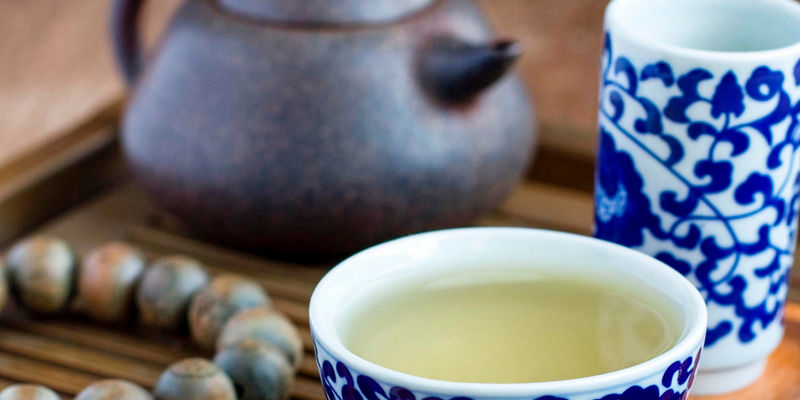
The history of tea in China is long and complex, given that the Chinese have enjoyed tea for millennia. Scholars hailed the brew as a cure for a variety of ailments, the nobility considered the consumption of good tea as a mark of their status and the common people simply enjoyed its flavor. In 2016, the earliest known physical evidence of tea was discovered in the mausoleum of Emperor Jing of Han (d. 141 AD) in Xian. Tea then became a popular drink in the Tang (618–907) and Song (960–1279) Dynasties.
This article highlights two central components of China’s rich traditions surrounding tea: the ceremony of “Gongfu Cha” and the sophisticated porcelain for which the country has been known for centuries.
The origins of tea ceremonies
For centuries, steaming tea leaves was the primary method used in the preparation of tea. The Chinese learned to process tea in a different way in the mid-13th century, when tea leaves began to be roasted rather than steamed. This is the origin of today's loose teas and the practice of brewed tea.
Traditional Chinese tea ceremonies, known as “Gongfu Cha,” are a refined and intricate practice that emphasizes the art of brewing and appreciating tea. Originating during the Song Dynasty, these ceremonies involve a series of precise steps, including the selection of high-quality tea leaves, the use of specialized teaware and the careful control of water temperature and brewing time. The process is often performed in a serene and contemplative setting, allowing participants to savor the aroma, taste and appearance of the tea. Gongfu Cha is not only a social activity but also a cultural expression that reflects the values of harmony, respect and tranquility in Chinese society.
Traditional Chinese porcelain
Ceramics of all types have been important in Chinese culture for millennia. Porcelain’s initial creation date continues to be up for debate, but scholars believe that it began during the Sui Dynasty (581-618 AD).
Porcelain is a high-firing white clay bodied ceramic, which is usually pure white due to the high content of a clay component known as kaolin. These characteristics allow for the creation of white porcelain of finer, thinner and lighter-weight vessels—perfect for the application of colorful glaze designs.
Porcelain became the object of desire first by emperors, later the wealthy Chinese merchants, and eventually Europeans and North Americans in later centuries. The imperial kilns at Jingdezhen, where porcelain may have been produced as early as the 6th century, created extremely fine porcelain from the 14th century onwards.
Once the clay has been prepared, shaped or molded by hand, it is glazed, either with a solid color or perhaps more intricately decorated with a hand-drawn design of one or more colors. The glazed pots are then loaded into a kiln and fired at a much higher temperature than other stoneware or earthenware.
-
Encounter the supernatural grace of Apsara dance
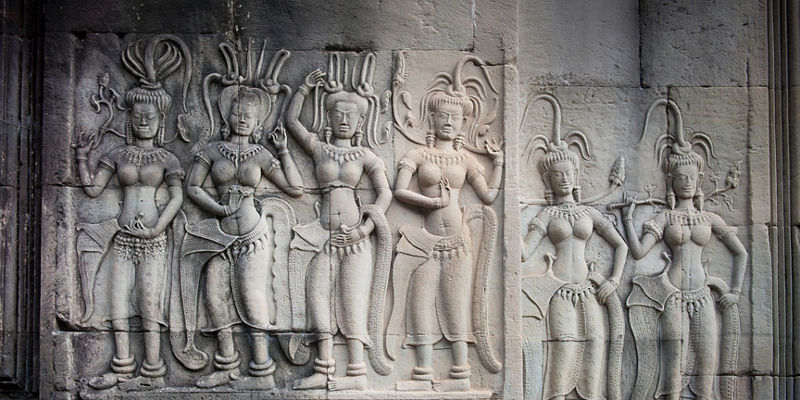
In Hindu and Buddhist mythology, an Apsara is a female spirit of the clouds and waters. Frequently encountered English translations of the word “Apsara” include “nymphs,” “celestial nymphs” and “celestial maidens.” Due to their association with water, they may be compared with the naiads of ancient Greece. These supernatural women—youthful, elegant and skilled in the art of dance—are often depicted in bas-relief on temple walls in Cambodia, Java and Bali. Their beauty and skill provided entertainment for gods and men alike, and they were said to be the caretakers of fallen heroes.
Thousands of mesmerizing movements
Today, more than 1,500 deliberate, mesmerizing movements and hand gestures characterize the dance of Apsara. Each of these gestures, called kbach, represents a natural element such as fruit, leaves or flowers. In addition to the kbach, dancers must perfect approximately 3,000 distinct poses. It is said that mastery of the dance occurs only after a full nine years of training. Male dancers are also used to portray certain roles, and they too must undergo rigorous instruction in the art of Apsara.
A royal dance
During Apsara’s 12th-century heyday, King Jayavarman VII boasted approximately 3,000 dancers in his court. The fall of Angkor during the 15th century led to far fewer dancers, and the art form remained confined to the walls of the royal court until the mid-20th century. The newly created Cambodian Royal Ballet began touring internationally to share Cambodian culture and heritage.
UNESCO honors Apsara
Like many traditional Cambodian arts, Apsara dance was almost lost during the era of the Khmer Rouge. Fortunately, a few practitioners survived the regime and were able to revive the art form during the 1980s and 1990s, and today Apsara performances are a regular occurrence in Siem Reap, Phnom Penh and other major areas. In 2008, UNESCO inscribed Apsara dance onto its Representative List of the Intangible Cultural Heritage of Humanity.
-
Exploring the “Hanoi Hilton”: From captivity to legacy
Historical beginnings and ironic nickname
Originally known as the Hỏa Lò Prison, this site where American POWs endured captivity during the Vietnam War gained a darkly ironic moniker from its inmates—the “Hanoi Hilton.”
Origins of the name “Hỏa Lò”
The term “hỏa lò” translates to “stove” or “fiery furnace.” Situated on a street bustling with shops selling wood and coal stoves, the prison's name held a connection to its surroundings. Constructed by the French in the late 19th century, they referred to it as Maison Centrale, using the euphemism for prison in French. Originally intended for 460 inmates, the facility expanded to accommodate 600. However, it often held over 2,000 prisoners, many of whom were subjected to dehumanizing conditions by the time the French were expelled in 1954. This prison embodied Vietnamese bitterness and resentment toward the French.
The Vietnam War era: An evolution in captivity
Throughout the Vietnam War, North Vietnam used the prison to confine American POWs. In the late 1960s, a new section emerged, known as the “Las Vegas Strip,” specifically designed to house incoming prisoners, particularly pilots. The buildings within were playfully named after landmarks along the Las Vegas Strip, a nod to the pilots’ memories from their training days at Nellis Air Force Base. These incarcerated individuals faced torture and extended periods of solitary confinement, primarily aimed at eliciting propaganda statements critical of the US. Demonstrating remarkable resilience and humor, they navigated the ordeal. As more POWs were transferred to the Hanoi Hilton, conditions improved, as did their morale.
Distinguished “Guests” and their narratives
Among the notable figures who experienced captivity at the Hanoi Hilton were James Stockdale, the 1992 US vice presidential candidate, and Senator John McCain, the 2008 Republican presidential nominee. Brigadier General James Robinson Risner, author of The Passing of the Night, provided a detailed account of his seven-year imprisonment. Senator McCain's Faith of My Fathers offered insights into life within the prison walls. The film The Hanoi Hilton (1987) spotlighted the prisoners' steadfast resistance.
Enduring legacy and museum transformation
While the prison itself was dismantled in the 1990s, a lasting remnant remains—the gatehouse, now transformed into a museum. This space narrates the prison's history from the era of French colonial rule onwards. The museum, however, downplays the severe mistreatment suffered by the prisoners. It even implies that the “Hanoi Hilton” moniker suggests the inmates found the conditions akin to those of a hotel. Nevertheless, a wealth of memoirs and oral histories vehemently contradicts this narrative, shedding light on the stark reality these prisoners faced.
-
French influences in Southeast Asia
French colonial legacy in Indochina
Indochina, encompassing present-day Vietnam and Cambodia, was a French colony from 1887 to 1954. French engagement in Vietnam dates back to the 17th century with Jesuit missionary Alexandre de Rhodes. A French Catholic priest, Pigneau de Béhaine, played a pivotal role in assisting Vietnam’s Nguyen dynasty.
Missionary activity and political intrigues
The 19th century witnessed fervent missionary endeavors supported by the French government, prompting local resistance. The French countered this resistance, impacting the restored Nguyen dynasty. Cambodia’s plea for protection resulted in a 1863 agreement with France, gaining protection from Thailand in exchange for territorial concessions.
Cultural and linguistic impacts
French cultural influence left a lasting mark, introducing Catholicism and establishing French as the language for education, administration and trade. This linguistic impact persisted beyond colonial rule, with remnants still discernible in contemporary times.
Colonial classifications and economic ventures
French Indochina can be classified as a “colony of exploitation,” meaning that taxes were raised locally to fund the presence of the French government. The French began trading locally and produced opium, salt and rice alcohol, and took over the minting of the colony’s currency, the French Indochinese piastre.
French interests in Vietnam expanded to tea, rice, coffee, pepper, coal, zinc and tin; from Cambodia, they harvested rice and pepper. At the turn of the 20th century, the French government established rubber plantations in Vietnam to supply companies like Michelin and began to open factories to process rubber and other commodities.
Infrastructure development and resilient resistance
The French initiated the construction of hospitals, dams, canals and railways, yet these projects often imposed substantial financial burdens on the local populace. In 1930, Ho Chi Minh organized a Communist resistance movement against French occupation. WWII witnessed Japanese control, followed by French return until their final expulsion in 1954.
Enduring cultural influence
French influence has left indelible marks in language, architecture and customs. Sidewalk cafés, opera houses and culinary offerings continue to reflect this historical amalgamation. French influence on the local cuisine has been profound, with numerous local restaurants serving a fusion cuisine featuring such dishes as noodles with escargot, beef curry with French- or Vietnamese-style baguettes, pâté, sa lát (salad) and French-inspired meat pastries.
-
Ho Chi Minh City’s vibrant tapestry
Captivating modern urban landscape
The pulse of Ho Chi Minh City is undeniable, fueled by its youthful spirit and forward-looking attitude. As Vietnam’s commercial nucleus, this metropolis is rich in cultural and culinary treasures. Your visit offers an opportunity to immerse yourself in the captivating tapestry that makes Ho Chi Minh City a uniquely captivating destination.
French Colonial elegance
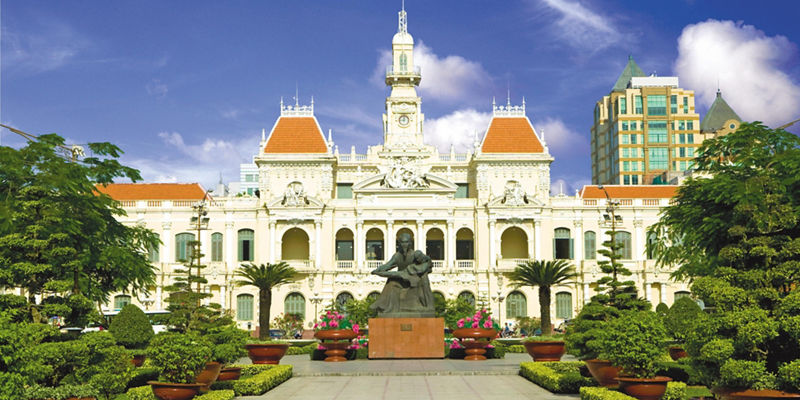
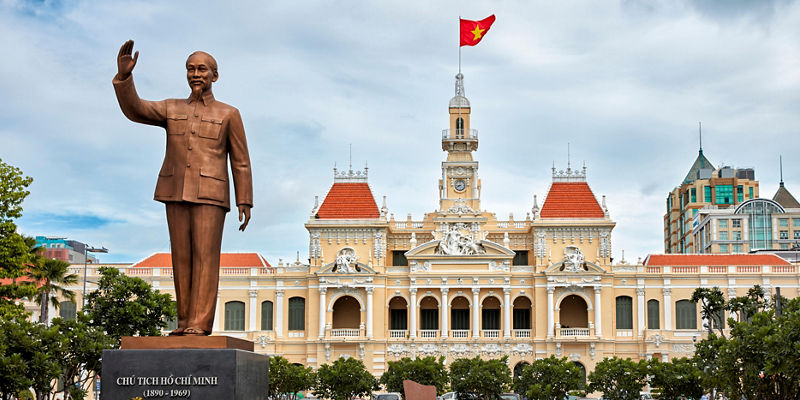
Among the city’s captivating French colonial structures, the Central Post Office stands out as a gem. Designed by French architect Alfred Foulhoux, its brilliant yellow façade and graceful green-shuttered windows are a visual delight. Another masterpiece, the Notre Dame Cathedral, draws inspiration from Paris’s iconic landmark. Crafted from materials imported from France, this neo-Renaissance marvel’s twin bell towers distinguish it with dramatic flair.
Fusion of eras: The Reunification Palace
A more contemporary marvel, the Reunification Palace emerged in 1966 with a design by Paris-trained Vietnamese architect Ngô Viết Thụ. A captivating blend of Eastern and Western influences defines this landmark, reflecting the very essence of Ho Chi Minh City.
Chinatown’s timeless charms
Within the vibrant Chinatown district, remnants of the city’s traditional heritage are lovingly preserved. Amidst grand pagodas and serene Buddhist temples, modern skyscrapers assert the city’s dynamic outlook and future-oriented vision.
Savor the culinary kaleidoscope
Exploring this bustling urban hub is incomplete without indulging in its renowned twist on Vietnam’s iconic dish, pho. "Pho nam," the southern rendition, boasts an intricate and robust flavor profile. Its countless variations are available on nearly every street and in every eatery. Craving a quintessential bánh mì? These delectable sandwiches, nestled in French baguettes, can be savored in Ho Chi Minh City’s numerous cafés and shops. Don't miss local favorites like ốc (Vietnamese shellfish), bánh tằm bì (noodles, herbs, and meat with coconut cream sauce), and bánh xèo (crispy rice flour pancake filled with aromatics). To accompany your meal, enjoy a refreshing glass of cà phê sũa đá (strong iced coffee with condensed milk) or local beer.
-
Honoring Confucian legacy at the Temple of Literature
Historic hub of learning
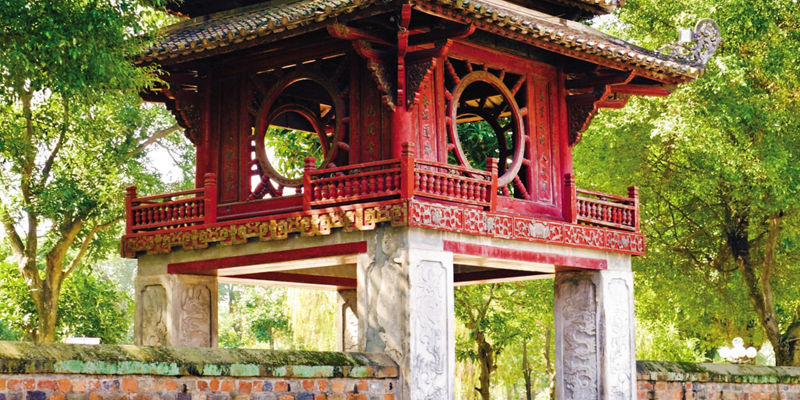
Dating back to 1070 AD, the Temple of Literature stands as a revered hub of learning and is one of Vietnam’s esteemed temples dedicated to Confucius, as well as revered scholars and sages. A mere six years after its construction, the Imperial Academy—the country’s inaugural university—emerged within its walls. This academy aimed to educate the nation’s nobility, esteemed bureaucrats, and later, remarkably talented individuals from diverse backgrounds.
Serene oasis of study
The temple’s lush gardens and ancient trees provided a serene refuge for the privileged students fortunate enough to secure admission to this prestigious institution. Amidst the pavilions, statues, halls and stelae, intensive study sessions were held, rigorously preparing scholars for the academy’s notoriously challenging exams. This university persevered for seven centuries until its closure in 1779.
Legacy and evolution
In 1802, the Nguyen monarchs designated Hue as their capital and established a new Imperial Academy there, while the original Imperial Academy in Hanoi, with diminished prestige, transformed into a public school. The Temple of Literature, spanning over 13.3 acres (54,000 square meters), boasts parklands, five courtyards and a man-made lake.
Stelae of wisdom
In 1484, the king erected 116 stelae, adorned with blue turtles—a symbol of longevity in Vietnamese culture. Dubbed the Stelae of Doctors, these columns carry motivating messages and symbols that extol the virtues of hard work and encourage pursuit of knowledge. These stelae bear the names and birthplaces of numerous graduates, perpetuating nearly a millennium of reverence for wisdom.
Preservation through time
Despite regional conflicts and disasters, the Temple of Literature has valiantly safeguarded its historic architecture and relics. Among these are the scholars’ uniforms and grand bronze bells. Despite significant renovations in 1920, 1954 and 2000, this tranquil complex retains the timeless essence of ancient Vietnam, expressed through its architecture, landscapes and distinctive character.
-
Learn More About a Favorite Chinese Pastime
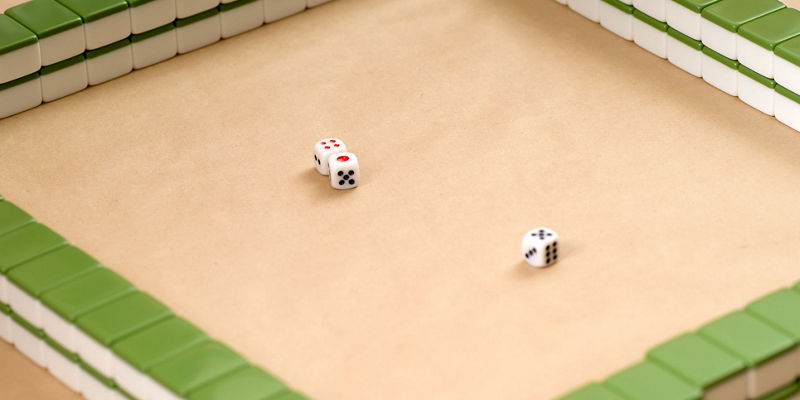
Though its exact origins remain a mystery, Mahjong is known to have caught on among Western expatriates living in China around the turn of the 20th century. In 1920, Ezra Fitch (of lifestyle retailer Abercrombie & Fitch) began selling imported Mahjong sets in the company’s New York City stores, and a commercial version by game manufacturer Parker Brothers soon followed. Mahjong’s popularity quickly exploded—particularly among American Chinese and American Jewish communities, which have long gravitated toward Mahjong as a way to strengthen social bonds and honor their cultural heritage.
-
Terms and tips for visiting Buddhist temples
The names used for Buddhist temples in this region are derived from history, mythology, ancient Sanskrit and more. Here are a few of the terms you will hear on your upcoming journey:
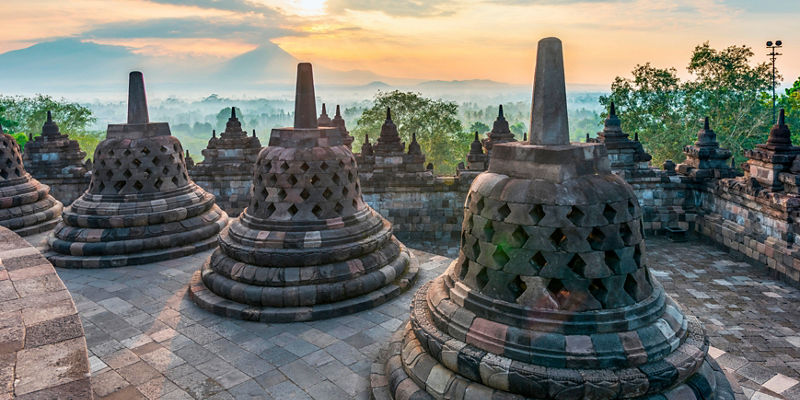
Angkor is a Khmer term that means “city.” It is derived from the Sanskrit word nagara, which carries the same meaning.
Banteay is the Khmer word for “citadel” or “fortress.” The names of many of the area's walled temples contain the word “Banteay.”
Kampong means “port.” During your time in Southeast Asia, you will visit both Kampong Thom (“large port”) and Kampong Cham (“port of the Cham people”).
Phnom is Khmer for “mountain.” The name of Cambodia's capital city, Phnom Penh, means “Penh's Hill”—a reference to the legendary Lady Penh, who is said to have built the city’s beloved Wat Phnom (“hill temple”).
Siem Reap means “Siam defeated.” Though commonly thought to be a reference to a mid-16th century military incident, the name’s actual origin remains unknown.
Srey means “woman.” Angkor's Banteay Srey temple, dedicated to the Hindu god Shiva, literally means “citadel of women.”
Ta means “grandfather" or “ancestor.” Ta Prohm, Angkor's fascinating overgrown temple, means “ancestor Brahma” (with “Brahma” referring to Hinduism’s god of creation).
Thom is Khmer for “large.” Therefore, the name for the ancient city of Angkor Thom means “large city.”
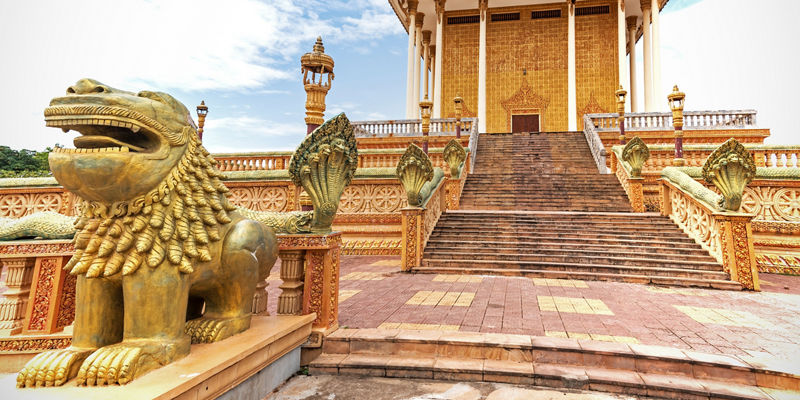
Wat is Khmer for “temple.” It may derive from vattaram, the equivalent Sanskrit term. A wat is a monastery temple found in Thailand, Laos or Cambodia. In Cambodia, the word “wat” can be used to refer to any place of worship, whether Buddhist or otherwise. “Angkor Wat” translates to “city of temples”—a fitting moniker for this vast architectural complex.
In Southeast Asian Buddhist temples, there are a few behavioral norms to which guests are expected to adhere. Here are a few pointers to help assure an enjoyable visit:
- Remove your hat and shoes.
- Show respect by speaking in low tones, and do not smoke or chew gum.
- Both men and women should dress modestly, wearing long pants rather than shorts and tops that cover the shoulders.
- Do not touch or climb on a Buddha statue, and be sure to back away from it before turning your back.
- Do not point with your fingers or feet. Indicate something with your right hand, palm facing up.
- Always stand when monks or nuns enter to worship.
- Women should never touch a monk or hand him anything directly.
- Donations may be placed in a donation box if provided.
-
Thailand, an ideal destination for outdoor experiences
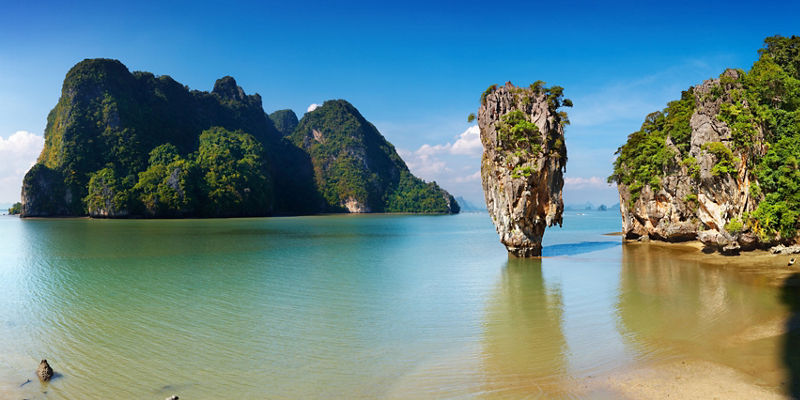
Thailand offers a wealth of natural beauty, especially near destinations such as Bangkok and Phuket. In the heart of Bangkok itself, Lumpini Park offers visitors a green oasis perfect for a leisurely stroll or a picnic. Near Phuket, Kata Beach and Patong Beach are famous for their soft sands and clear waters, ideal for relaxation and water activities. Nature enthusiasts can also explore Phuket Elephant Sanctuary, where rescued elephants roam freely in their natural habitat. For a unique experience, visit Phuket’s Monkey Hill, where you can interact with playful monkeys and enjoy panoramic views of Phuket Town.
Thailand is also home to several notable national parks. Established in 1962 as Thailand’s first national park, Khao Yai National Park is now a UNESCO World Heritage Site. Situated 109 mi (175 km) from Bangkok, it features lush forests, diverse wildlife and stunning waterfalls. It is one of the few places in Thailand where wild elephants still survive. Thailand’s largest national park, Kaeng Krachan National Park, offers breathtaking views, ample hiking trails and abundant wildlife. Notable mammal species include elephants, bears and leopards. There are also more than 400 bird species, making it a birdwatcher’s paradise.
-
The history of Southeast Asia
Prehistory: The migration
The earliest non-Aboriginal Southeast Asians appear to have arrived from southern China around 2500 BC. Around 1500 BC, the Mon people and ancestors of the Khmer came from Burma (now Myanmar), while Thai people arrived from southern China. By around the 5th century BC, the people of what is now known as the Ðông Sơn culture in present-day Vietnam had mastered the art of metalwork.
Ancient kingdoms
Southeast Asia’s ancient kingdoms can be grouped into two types: agrarian economies (including Ayutthaya and Khmer) and maritime trading economies (including Malacca and Srivijaya). While the agrarian empires were mighty, Southeast Asia rapidly became an international trading hub, first between India and China. This inevitably led to considerable cross-pollination of ideas, including the import of Buddhism and Hinduism from India. Western travel to Southeast Asia began in 166 AD with the arrival of merchants from the Roman Empire. In 1295, Marco Polo returned to his native Venice after a lengthy tour of Asia, bearing treasures and tales of wonder.
The colonial era
Europeans heard the siren song of trade with Southeast Asia in the early 16th century—and the missionaries came along to spread the message of Christianity. The Dutch formed the Dutch East India Company, which established a city known as Batavia (now Jakarta) as a trading base. Britain, in turn, formed the British East India Company, based in the Malay state of Penang. International squabbles led to these areas changing hands frequently among the Dutch, Spanish and British. In 1819, Stamford Raffles established Singapore as a key trading post for Britain in its rivalry with the Dutch, but in 1824 an Anglo-Dutch treaty was struck which clearly demarcated the areas’ respective territories.
As colonial activities increased, the entire region was taken over by European powers—with the exception of Thailand, which never fell under foreign rule despite being affected by colonialism. By the early 20th century, the British occupied Burma, Malaysia and northern Borneo, the French controlled Indochina (roughly Vietnam, Cambodia and Laos), the Dutch ruled the Dutch East Indies (Sumatra, Java, Borneo and New Guinea), and Portugal had claimed Timor. Spain ruled the Philippines, but was forced to hand it over to the US in 1898 following the conclusion of the Spanish-American War.
Though colonial rule had a profound and permanent effect on the region’s use of resources, demographics and culture, the situation remained relatively stable until the arrival of World War II.
-
Vietnamese summer rolls (gỏi cuốn)
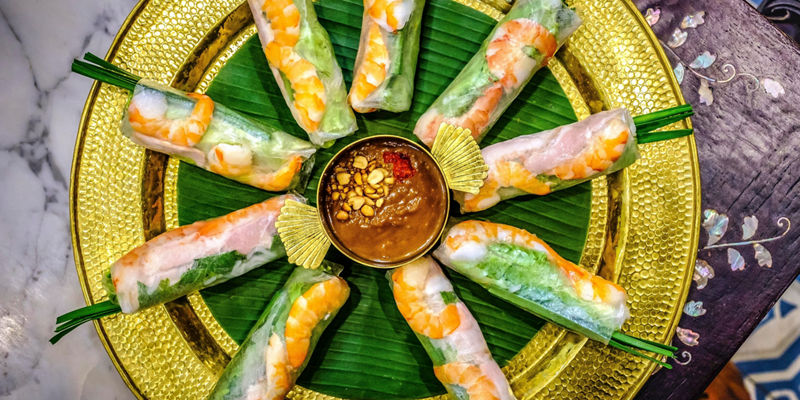
A worldwide culinary favorite, Vietnamese summer rolls—also known as spring rolls—are one of Southeast Asia’s best-known dishes. Beloved by locals seeking to stay cool during hot, humid weather, these chilled rolls are healthy, filling and portable. No matter when or where you enjoy them, summer rolls offer a taste of Vietnam’s proud culinary heritage. This light, delectable appetizer is packed with local ingredients from the Mekong Delta and South China Sea.
Vietnamese summer rolls—or gỏi cuốn, which translates to “salad roll”—showcase the finest products available from the region’s rice fields and floating markets. A typical preparation includes carrots, cucumbers, shrimp, peanuts, vermicelli noodles and fresh herbs rolled inside a rehydrated sheet of rice paper. This flavorful dish is served chilled with a spicy dipping sauce.
Summer rolls likely originated in China during the Jin Dynasty (266–420 AD) and were consumed to commemorate the first day of spring. By the end of the 3rd century, the Chinese had introduced the dish to Vietnam, and the rolls were adapted to suit Vietnamese palates.
Asia Highlights
A trip to Asia offers an unparalleled opportunity to discover intriguing cultures and astounding beauty across this fascinating region. Here are some compelling reasons why Asia is worth considering as a destination:
- The serene ritual of tea preparation
- Historic landmarks & modern architecture
- Verdant green spaces in the heart of urban centers
- Fermented rice spirits, like soju & sake, or rice wine
- Spectacular temples & ancient shrines
- Lively street markets offering delectable treats
Destination Insight Videos

Food in China (2:10)
Venture into a Chinese night market to sample some of China’s most beloved delicacies. Join Karine and discover the secrets of hot pot, Peking duck, homemade noodles and more.

Chinese Porcelain (3:53)
Join Karine as she learns about the history of Chinese porcelain, an art form created during the Han Dynasty and shaped by artisans from the Song, Ming and other dynasties.

At Home in Ho Chi Minh City (13:38)
Join Viking Saigon Program Director, Ut Lam Thanh, for an introduction to the vibrant streets of Ho Chi Minh City, Vietnam’s largest metropolis. Immerse yourself in the sights and sounds of the iconic Bến Thàn Market and admire colorful blooms at Ho Thi Ky’s fresh flower market. Then, delve into the rich cultural heritage of Chinatown's Hao Sy Phuong Alley—a charming, centuries-old community of more than 200 households.

Alastair Miller in conversation with Dilhan and Malik Fernando of Dilmah Tea (17:30)
Alastair Miller is joined by Dilhan and Malik Fernando, the sons of Dilmah Tea founder Merrill J. Fernando, for an insightful interview about the brand’s mission to bring fresh, ethically produced Sri Lankan tea to the world. Learn more about Dilmah’s business philosophy and why the brand’s loose-leaf teas are served on board Viking’s fleet. Later, during a tour of the Dilmah Tea Plantation and Factory, discover the traditional process of hand-picking, grading and producing premium teas and uncover the delicate art of cultivating pure cinnamon.

Explore Japan’s capital city of Tokyo with Alastair Miller (14:15)
Join British photographer Alastair Miller as he tours the vibrant city of Tokyo, where tradition meets futuristic innovation. On his journey, he visits the Tokyo Skytree, one of the tallest structures in the world, where staff share insights into its design and sweeping views across the capital. He also finds tranquility at the Shunkaen Bonsai Museum, guided by a student caretaker, who introduces the centuries-old art of Bonsai and its deep spiritual meaning.

Immerse yourself in Colombo’s landmarks and discover Sri Lankan cuisine (15:14)
Follow along as Alastair Miller tours Colombo, the colorful capital of Sri Lanka. His day of exploration begins with a ride on a tuk-tuk, a small, three-wheeled motorized vehicle. He stops at the striking Red Mosque—formally known as Jami Ul-Alfar Mosque—a red-and-white striped structure renowned for its Indo-Saracenic architecture. He then indulges in a traditional Sri Lankan breakfast of string hoppers, a flavorful meal centered around idiyappam—thin, steamed rice noodles that are pressed into flat discs and topped with curry or relish. Alastair’s day ends in a local chef’s kitchen for a hands-on cooking lesson, where he learns how to prepare authentic shrimp curry.
Asia Travel FAQ
All-Inclusive Itineraries—Asia
Choose one of our enriching, all-inclusive voyages and discover the many benefits of exploring in Viking comfort.